




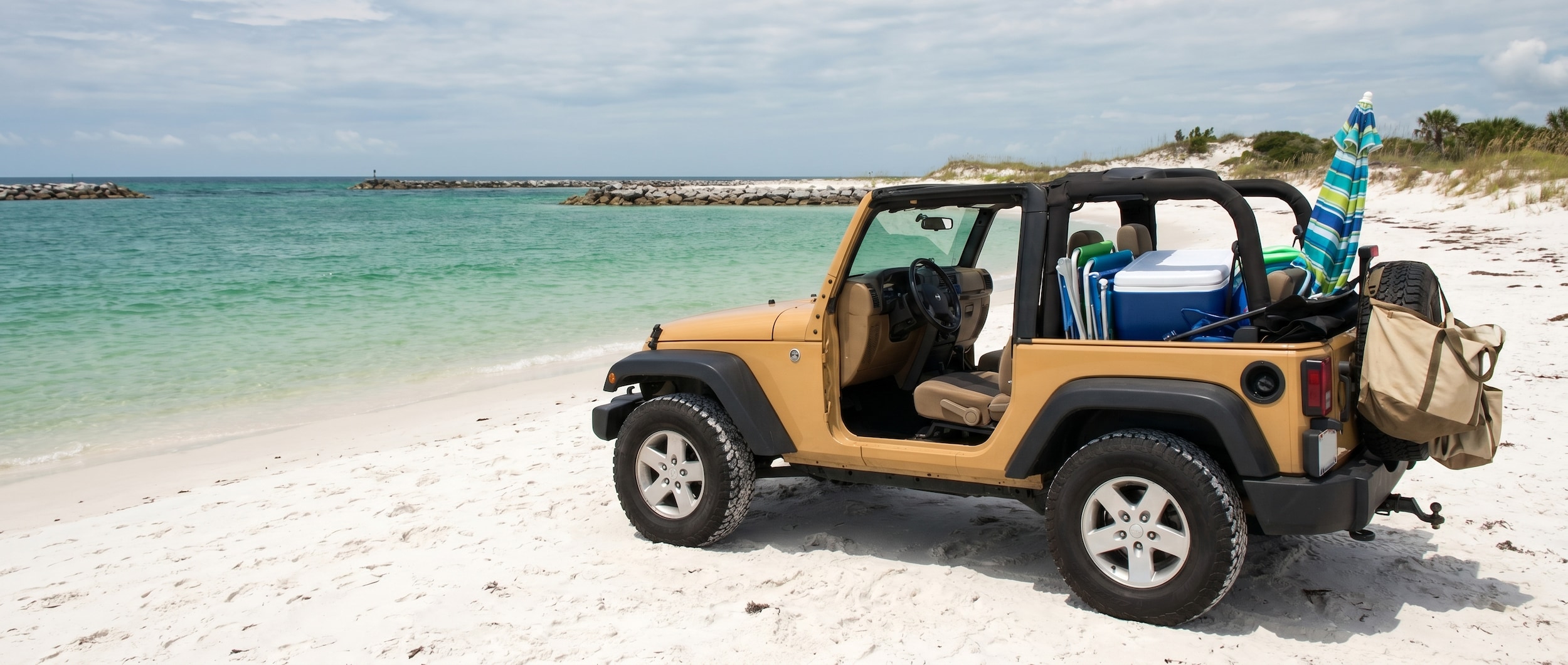
Sand between your toes feels amazing - sand in your vehicle's engine, not so much. Preparing your vehicle for a weekend at St. Andrews State Park in Panama City, FL requires more than just throwing beach chairs in the back. The combination of salt air, loose sand, and intense Florida sun creates unique challenges that can turn your perfect beach getaway into an expensive repair bill if you're not prepared. Here's your complete guide to getting your Chrysler®, Dodge®, Jeep®, or Ram® ready for everything from Shell Island adventures to fishing at the jetties.
Understanding St. Andrews' Unique Vehicle Challenges
The 1,200-acre paradise poses three major threats to unprepared vehicles: corrosive salt spray that can reach your undercarriage even in the parking areas, fine sand that infiltrates everything from door seals to air filters, and UV exposure that's 25% more intense than inland areas due to reflection off water and white sand.
Park rangers report that the most common vehicle issues at St. Andrews involve overheating from clogged radiators, dead batteries from leaving doors open while unloading, and stuck vehicles in the softer sand near the dunes. The park's proximity to the Gulf means salt air affects your vehicle from the moment you cross the bridge at Thomas Drive.
Your vehicle faces these conditions whether you're launching at the boat ramp, setting up at the Pine Grove picnic area, or parking for the Shell Island shuttle. But with proper preparation, your weekend adventure becomes worry-free.
Essential Pre-Trip Vehicle Inspection Checklist
A thorough inspection 48 hours before your trip prevents breakdowns that could ruin your weekend. Panama City's humid climate and the added stress of beach driving demand extra attention to these systems.
Cooling System Check- Verify coolant levels and condition
- Inspect radiator for debris or damage
- Check belts and hoses for cracks
- Test cooling fan operation
- Clean radiator fins of any blockages
- Check tire pressure (heat increases pressure by 2-3 PSI)
- Inspect tread depth for sand traction
- Look for sidewall damage or dry rot
- Verify spare tire condition and jack operation
- Consider tire pressure gauge for beach adjustments
- Test battery charge and terminals
- Clean any corrosion from connections
- Check alternator charging rate
- Verify all lights function properly
- Test power locks and windows
The Silverado 1500's enhanced cooling system handles Florida heat exceptionally well, while the Traverse's tire pressure monitoring system alerts you to any changes from temperature fluctuations. These factory features give you an advantage, but regular checks remain essential.
Smart Packing Strategies for Beach Adventures
Maximizing cargo space while protecting your interior requires strategic packing. St. Andrews visitors typically bring substantial gear - from fishing equipment to shade canopies.
Interior Protection Essentials:- Waterproof seat covers for wet swimsuits
- Rubber floor mats to contain sand
- Cargo area liner for coolers and beach gear
- Microfiber towels for quick cleanups
- Plastic bins for wet/sandy items
The Tahoe offers 122.9 cubic feet of cargo space with seats folded, perfect for kayaks, paddleboards, and fishing gear. The Colorado's bed provides 49.9 cubic feet for coolers and beach equipment while keeping sand out of the cabin. Smart organization means using vertical space with cargo nets and remembering that sand travels - seal items in containers when possible.
Loading heavy coolers? Place them against the back of seats or secured against wheel wells to prevent sliding during the drive down State Road 392.
Protecting Your Vehicle from Salt and Sand Damage
Salt air begins affecting metal surfaces within hours, while sand acts like sandpaper on moving parts. Protection starts before you leave home and continues throughout your visit.
| Protection Type | Application Method | Reapplication Frequency |
|---|---|---|
| Undercarriage Rinse | Fresh water spray | After each beach day |
| Wax/Sealant | Hand or machine apply | Every 3 months |
| Rubber Seal Treatment | Silicone spray | Monthly during beach season |
| Interior Protectant | Spray and wipe | Before each trip |
The Wrangler's sealed electrical connections and corrosion-resistant underbody coating provide excellent beach protection, but additional care extends component life. Apply protective wax to all painted surfaces, paying special attention to chips or scratches where salt can penetrate.
Door seals deserve special attention - sand accumulation here causes wind noise and water leaks. Clean seals with damp cloth, then apply rubber protectant to maintain flexibility. The Grand Cherokee's acoustic glass and premium seals excel here, but maintenance remains important.
Check out our pre-owned inventory for models with Florida-friendly features like rubberized floors and water-resistant interiors - previous beach-going owners often chose these practical options.
Beach Driving Techniques and Safety Considerations
While St. Andrews doesn't allow driving on beaches, accessing parking areas and navigating sandy overflow lots requires specific techniques. The park's main parking fills by 9 AM on summer weekends, forcing visitors to sandy overflow areas.
Soft Sand Navigation:- Reduce tire pressure to 15-20 PSI for better flotation
- Maintain steady momentum without spinning tires
- Avoid sudden steering inputs
- Use 4WD Low for maximum control
- Follow existing tracks when possible
The Ram 1500's available 4x4 with electronic locking rear differential excels in loose sand, while the Compass Trailhawk's Selec-Terrain system includes a dedicated sand mode. However, technique matters more than technology.
If you feel tires spinning, stop immediately. Continued spinning digs deeper holes. Rock the vehicle gently using forward and reverse, or place floor mats under tires for traction. The park's overflow lot near the Environmental Learning Center presents the softest sand - approach at an angle to maintain momentum.
Post-Beach Cleaning and Maintenance Routine
Your vehicle needs attention within 24 hours of beach exposure to prevent long-term damage. Salt begins corroding unprotected metal immediately, while sand in brake components causes premature wear.
Immediate Actions (Same Day):- Rinse undercarriage thoroughly
- Vacuum interior completely
- Wipe down door jambs and seals
- Clean wheels and brake areas
- Check air filter for sand
- Detailed interior cleaning
- Engine bay inspection and cleaning
- Apply protectant to rubber/vinyl
- Check fluids for contamination
- Test all electronics for sand infiltration
The Durango's cabin air filter prevents most sand from entering the HVAC system, but checking and replacing filters after beach season ensures optimal performance. Similarly, the Pacifica's Stow 'n Go seating creates crevices where sand hides - use compressed air for thorough cleaning.
Take a look at our financing options if beach adventures have you thinking about upgrading to a more beach-friendly model with features like washable floors and enhanced corrosion protection.
Common Questions About St. Andrews State Park Vehicle Prep in Panama City, FL
How early should I arrive at St. Andrews State Park to ensure parking near the beach?
Arrive before 8:30 AM on summer weekends and holidays to secure main lot parking near the beaches and jetties. The park reaches capacity by 10 AM during peak season, forcing later arrivals to use sandy overflow lots or return another day. Weekday visits offer better parking availability throughout the day.
What emergency supplies should I keep in my Jeep when visiting St. Andrews?
Keep a tow strap, portable air compressor, jumper cables, first aid kit, extra water, and sand extraction boards in your Jeep. These items handle the most common beach-area emergencies from dead batteries to stuck vehicles. Store supplies in waterproof containers to prevent salt damage.
Does Bay Chrysler Dodge Jeep Ram service vehicles with beach-related damage?
Yes, our service technicians regularly address salt corrosion, sand infiltration, and undercarriage damage from beach exposure. We recommend professional undercarriage cleaning and inspection after extensive beach use. Our team understands the unique challenges Panama City vehicles face from coastal conditions.
Which Ram truck configuration works best for hauling beach gear to St. Andrews?
The Ram 1500 Crew Cab with 5'7" bed balances passenger comfort with cargo capacity for beach trips. This configuration seats five adults comfortably while the bed handles coolers, chairs, and water sports equipment. The available RamBox cargo management system keeps smaller items organized and secure.
Are there vehicle wash stations near St. Andrews State Park?
Several self-service car washes operate along Thomas Drive within five minutes of the park exit. The closest offers undercarriage washing essential for salt removal. Rinse your vehicle immediately after beach visits, focusing on wheel wells and undercarriage where salt accumulates.
What time do the St. Andrews State Park gates close, and can my vehicle get locked in?
Park gates close at sundown year-round, with exact times posted daily at entrance stations. Rangers lock gates promptly, and vehicles remaining inside must stay overnight until 8 AM reopening. Plan to exit at least 30 minutes before posted closing to avoid being locked in.
Your Beach-Ready Vehicle Awaits
Preparing your vehicle for St. Andrews State Park adventures protects your investment while ensuring reliable transportation for countless beach memories. From pre-trip inspections to post-beach maintenance, these steps keep your Chrysler, Dodge, Jeep, or Ram performing perfectly despite sand, salt, and sun exposure. The team at Bay Chrysler Dodge Jeep Ram understands the unique demands our coastal environment places on vehicles, and we're here to help with everything from beach-friendly vehicle selection to professional maintenance services. Let's get your next adventure started.