




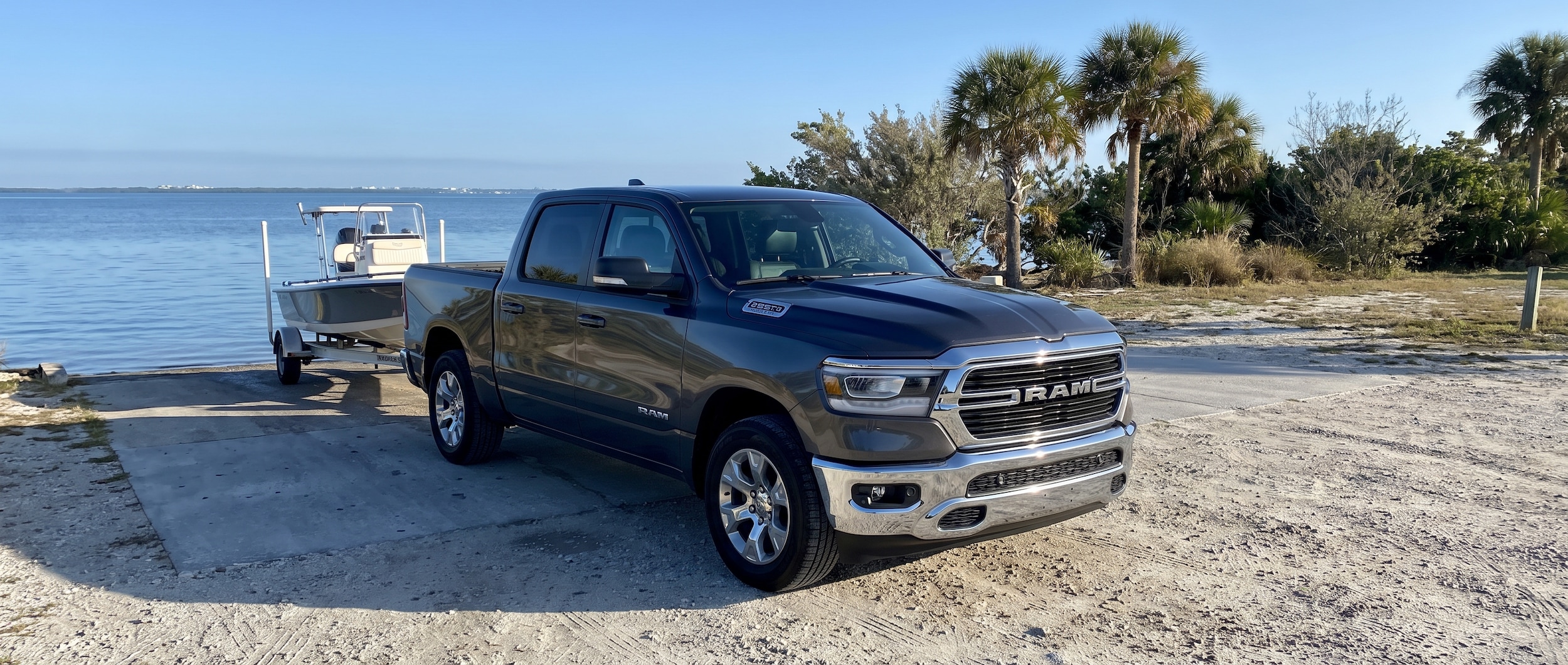
The Ram 1500 has been one of the most-purchased trucks on the Gulf Coast for good reason -- it hauls, tows, and rides better than almost anything in its class. But "Ram 1500" covers a wide spread of model years, two distinct generations, and a trim ladder that runs from bare-bones workhorse to near-luxury. Buy the wrong year or the wrong trim, and you pay for it twice: once at purchase, again at the shop.
Browse used Ram 1500 trucks at Bay Chrysler Dodge Jeep Ram
The used-truck market around Panama City right now is loaded with fourth-gen trucks (2013-2018) and early fifth-gen trucks (2019-2023). Knowing which years to target -- and which to walk past -- is the difference between a reliable work truck and a project.
- Sweet-spot years: 2017, 2020, 2021-2022 offer the strongest balance of reliability and value in the used market
- Trim to target: Big Horn gives you the most usable features per dollar for daily drivers and boat towers; Tradesman wins if the truck is a dedicated work tool
- Years to watch: 2014 leads all model years in complaint volume; 2019 carries first-year redesign issues; skip 2013-2016 TIPM-era trucks unless the price reflects the risk
- Engine pick: The 3.6L Pentastar V6 is the low-drama choice; the 5.7L HEMI V8 adds towing muscle (up to 12,750 lb. when properly equipped) but requires a lifter inspection on pre-2020 trucks
- Air suspension: A used 4th-gen (2013-2018) with air suspension carries real repair risk; the 5th-gen (2019+) system was redesigned with a closed-loop nitrogen system and has shown far fewer failures
Which Ram 1500 years are the sweet spot for used buyers?
The two best windows to shop are 2017 (late fourth generation, fully sorted) and 2020-2022 (refined fifth generation). Each hits different needs and different price points -- here is what the data shows.
| Year / Range | Generation | Sweet Spot? | Years to Watch | Key Reason |
|---|---|---|---|---|
| 2013-2014 | 4th gen (early) | No | Avoid | TIPM electrical failures common 60k-110k mi; 2014 is worst complaint year on record |
| 2015-2016 | 4th gen (mid) | Partial | Watch closely | High complaint volume; power steering lawsuit covers this range |
| 2017-2018 | 4th gen (peak) | Yes | Minor | ZF 8-speed fully calibrated; lowest complaint count of the 4th gen era |
| 2019 | 5th gen (first year) | Caution | Watch | First-year redesign bugs; NHTSA ABS recall; eTorque battery issues documented |
| 2020-2022 | 5th gen (refined) | Yes | Minor | Resolved eTorque and ABS issues; Uconnect 5 on 2021+; best long-term ownership cost |
| 2023 | 5th gen (current used) | Good | Check recalls | Some recall activity but generally refined; verify VIN on NHTSA.gov |
2017: By this model year, Ram engineers had nearly a decade to refine the fourth-generation platform. The ZF-sourced 8-speed TorqueFlite transmission -- the one that ended years of complaints about rough shifts and gear hunting -- was fully calibrated. NHTSA complaint data shows 2017 with the lowest problem count in the 2013-2018 era. If you want a fourth-gen truck, this is the year to find.
2020-2022: The fifth generation that launched in 2019 got its rough edges smoothed here. The eTorque mild-hybrid system that caused stalls in some 2019 trucks was corrected. The 2021 model year added Uconnect 5 as standard, eliminating the infotainment lag and Bluetooth pairing failures that plagued earlier infotainment units. Owners of 2021+ trucks with the 3.6L Pentastar V6 and coil-spring rear suspension report some of the lowest ownership costs in the entire used half-ton segment.
Which Ram 1500 years should you watch out for?
Have a used truck inspected before you buy
The short answer: 2014 is the year to avoid most, and 2019 deserves a careful look before you commit.
2014 -- the most documented problem year. NHTSA records and consumer complaint databases consistently flag the 2014 Ram 1500 as the single worst model year by total complaint volume. Engine issues dominate: broken rocker arms, camshaft and lifter failures on the 5.7L HEMI, and stall events. One documented 2014 camshaft and lifter failure resulted in a significant repair bill at around 117,000 miles -- the kind of cost that can wipe out any savings from buying cheap.
2013-2016 -- the TIPM era. The Totally Integrated Power Module (TIPM) is a single control unit that manages fuel pumps, door locks, headlights, and starter relays. When it fails on these trucks -- often between 60,000 and 110,000 miles -- symptoms include random stalling, no-crank conditions, and intermittent power loss. A class-action lawsuit alleged that NHTSA received nearly 400 power steering reports covering 2013-2024 trucks, with at least 32 crashes tied to the alleged defect. If you are shopping this era, verify that any outstanding recalls have been completed via the VIN lookup at NHTSA.gov, and budget for the possibility of TIPM repair.
2019 -- first-year redesign caution. The 2019 truck introduced a completely new platform, and new platforms rarely launch without growing pains. Per NHTSA records, Ram issued a recall covering approximately 1.2 million trucks from the 2019 and 2021-2024 model years for an ABS control module software issue that could disable the Electronic Stability Control system. The 2019 also saw documented eTorque battery problems and interior electrical complaints. Pay a little more for a 2020 and skip the first-year risk.
Pros and cons: buying a used Ram 1500
| Pros | Cons |
|---|---|
| Class-exclusive coil-spring rear suspension (5th gen) rides like a pickup should | 2014 and 2013-2016 TIPM-era trucks carry documented repair risks |
| 5.7L HEMI V8 can tow up to 12,750 lb. when properly equipped | Air suspension on 4th-gen trucks (2013-2018) can fail expensively |
| 3.6L Pentastar V6 is a low-drama engine with proven longevity | 2019 first-year trucks need extra VIN scrutiny for open recalls |
| Strong parts availability from a Ram dealer service department | MDS lifter "HEMI tick" on high-mileage pre-2021 V8s requires inspection |
| 2021+ models include Uconnect 5, eliminating older infotainment frustrations | Diesel (EcoDiesel) 2014-2019 requires DEF fluid and emissions system maintenance |
Which used Ram 1500 trim fits which buyer?
The year gets you in the right window. The trim gets you the right truck.
Tradesman -- the clean work truck. If the Ram 1500 is going to a job site most mornings -- hauling tools, running to a marina or a construction supply yard -- the Tradesman is the logical choice. You get steel wheels, vinyl or cloth seating, black bumpers and grille, and a 7-pin wiring harness ready for a trailer. The 3.6L Pentastar V6 is standard and delivers 305 horsepower; the 5.7L HEMI V8 is available when you need more tow rating. Nothing on the Tradesman is there to impress anyone; everything on it is there to work.
A 2017-2018 Tradesman with the HEMI is worth seeking out for buyers who tow boats, campers, or equipment regularly. Ram's tow chart shows the 5.7L HEMI V8 without eTorque rated at up to 11,610 lb. on these trucks when properly equipped -- enough for most offshore fishing boats and larger pontoons common on Bay County waterways. On a properly equipped 2020-2022 Tradesman with the 5.7L HEMI and eTorque, that figure climbs to 12,750 lb.
Big Horn -- the sweet spot for most buyers. The Big Horn (sold as Lone Star in some markets, same truck) is where Ram 1500 value shopping typically ends up. Over the Tradesman, you gain chrome bumpers, alloy wheels, carpet flooring, upgraded cloth seating, and a larger Uconnect touchscreen. The 2021-2022 Big Horn with Uconnect 5 is a particularly clean find: the 8.4-inch touchscreen responds reliably, Bluetooth connections pair consistently, and the overall cabin feels more like a family vehicle than a job-site hauler.
For Panama City buyers who split time between the truck as a daily driver and a weekend boat-tower or trail-runner, the Big Horn finds that balance. The standard Class IV receiver hitch and 7-pin wiring harness are ready for a trailer without adding packages.
Laramie -- when you want more comfort and can find the right year. The Laramie steps up with heated front seats, leather options, and a larger infotainment display. On the used market, a clean 2020-2022 Laramie can represent strong value compared to its original sticker -- and it still carries the same coil-spring platform and tow ratings as the trims below it. One watch-out: Laramie and higher trims often came with the optional air suspension. The 5th-gen air system uses a closed-loop nitrogen design that is more reliable than the atmospheric-air 4th-gen system, but any air suspension on a used truck benefits from a full inspection before purchase.
Skip the Limited and above on a budget. Limited and higher trims carry four-corner active air suspension as standard, adding complexity that can be expensive to maintain on a used truck. Unless the price reflects that future service cost, Laramie and below is the smarter value play.
See Ram 1500 inventory at Bay Chrysler Dodge Jeep Ram
A note on engines: which one to choose on the used market
3.6L Pentastar V6 -- 305 horsepower, 269 lb.-ft. of torque, and a track record that stretches well past 200,000 miles with routine oil changes. This is the straightforward pick for buyers who do not tow heavy loads regularly. No Multi-Displacement System (MDS) lifter complexity, no diesel emissions maintenance. On 2021+ trucks, the eTorque mild-hybrid integration also helps reduce stress on the engine during stop-start cycles.
5.7L HEMI V8 -- 395 horsepower, 410 lb.-ft. of torque, and real towing muscle. The HEMI is the right call if you pull a boat, a camper, or a work trailer with any regularity. On trucks built before 2021, inspect carefully for the "HEMI tick" -- a valvetrain noise caused by MDS lifter wear that can escalate to a costly repair if ignored. On 2021 and newer trucks, Ram improved the oiling on the MDS lifters, and reports of this issue dropped substantially.
3.0L EcoDiesel (2020-2023 available) -- 260 horsepower, 480 lb.-ft. of torque, and the highest tow rating of the three when properly equipped. Strong for frequent towers, but maintenance costs are higher: DEF fluid, more expensive oil changes, and potential emissions system repairs. The second-generation EcoDiesel introduced in 2020 addressed many of the reliability issues that plagued 2014-2019 diesel trucks. If you go diesel, stick to 2020 and newer.
Frequently Asked Questions
What is the most reliable used Ram 1500 to buy?
The 2017 and the 2020-2022 model years consistently show the lowest complaint volumes and the most documented reliability among used Ram 1500 trucks. The 2017 represents the peak of the fourth-generation platform with a fully sorted ZF 8-speed transmission, while the 2020-2022 range captures the refined fifth generation after the first-year 2019 issues were corrected.
Should I avoid a used Ram 1500 with air suspension?
It depends on the generation. Fourth-generation air suspension (2013-2018) used an atmospheric air system known for compressor failures, leaking air springs, and costly repairs. The fifth-generation system (2019+) was redesigned as a closed-loop nitrogen system, and owner forums and service data show far fewer issues. On any used truck with air suspension, have a technician inspect the compressor and air springs before purchase.
Is the Ram 1500 Big Horn or Tradesman the better used buy?
For most buyers, the Big Horn delivers more usable daily features -- alloy wheels, carpet, a larger touchscreen, chrome trim -- without a dramatic step up in repair complexity over the Tradesman. Both share the same powertrain options and towing capability when identically equipped. Tradesman is the right pick for dedicated work-truck or fleet use where interior refinement matters less than durability and lower upfront cost.