





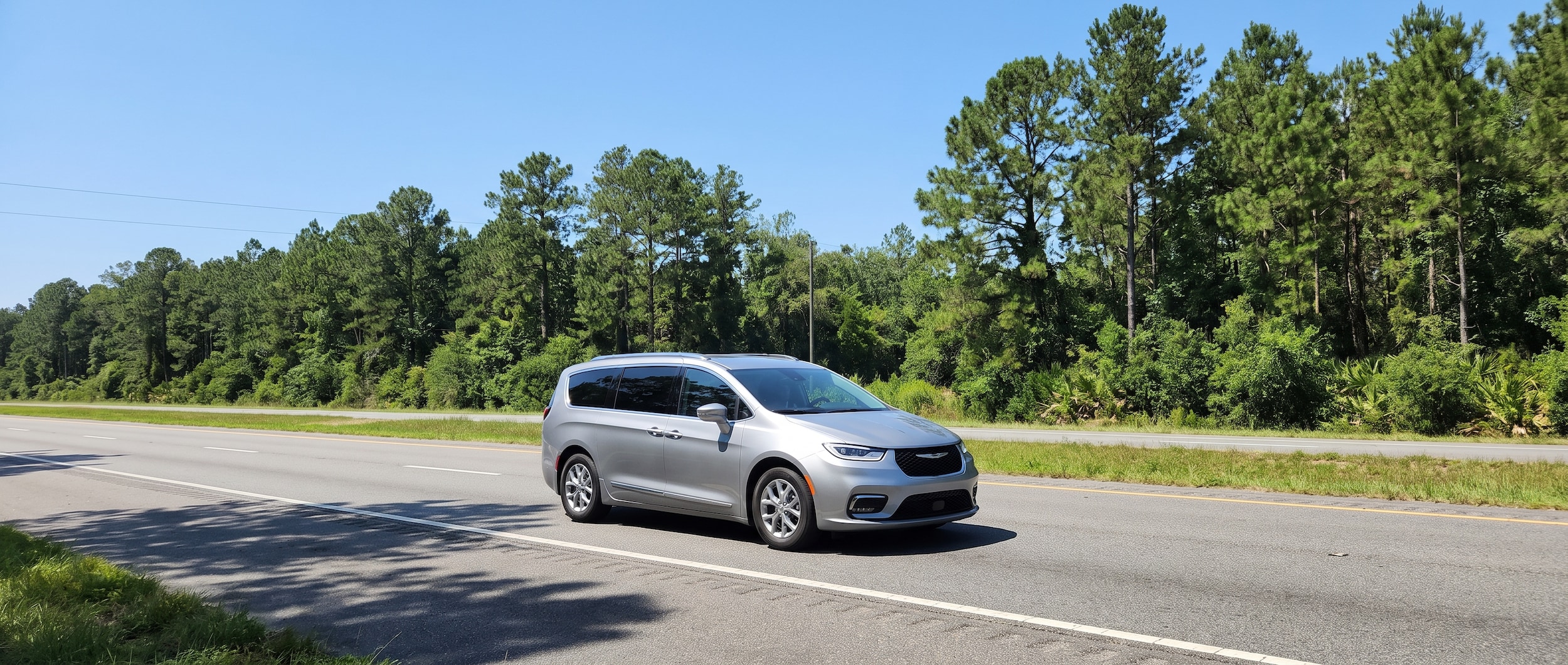
For this specific drive, the gas Pacifica wins. On a 265-mile highway haul in late July, the plug-in hybrid burns through its 32 miles of electric range before you've cleared Bay County, and the highway fuel economy gap between the two narrows enough that the practical edge shifts firmly to the standard V6.
The short version
- The 265-mile Panama City to Jacksonville route via I-10 runs almost entirely at highway speed, which is where the PHEV's electric advantage disappears fastest.
- The gas Pacifica FWD earns an EPA-rated 28 mpg highway. The PHEV delivers an EPA-estimated 30 mpg combined in hybrid mode after the 32-mile battery depletes.
- Both carry the same maximum 140.5 cubic feet of cargo with rows stowed. The Stow 'n Go seating system is exclusive to the gas Select and Limited trims; PHEV models use removable or tumble-forward second-row seats.
- July heat indices along the I-10 corridor can reach extreme levels. Both powertrains run the same tri-zone automatic climate control, but the PHEV battery sees added thermal load when A/C is heavy.
- If you do most of your miles around Panama City or Bay County before a long trip, the PHEV math changes. For a dedicated highway run to Jacksonville, the gas model is the cleaner choice.
You're loading the Chrysler Pacifica with bags, beach chairs, and three kids on a July Tuesday. The drive to Jacksonville is 265 miles, almost entirely on I-10 East through the pine scrub and flat corridor past Tallahassee. Two Pacifica configurations sit on the lot, the 3.6L V6 gas model and the Plug-In Hybrid. Browse the Pacifica lineup at Bay Chrysler Dodge Jeep Ram and let's sort out which one you actually want for this trip.
What's the Real Difference Between the Gas and PHEV Pacifica?
On paper the PHEV looks like the obvious pick for a fuel-efficient family van, and it's hard to argue at first glance, but the 265-mile Panama City-to-Jacksonville drive flips that logic, and the difference comes down to where each powertrain does its best work.
| Feature | Pacifica Gas (FWD) | Pacifica Plug-In Hybrid |
|---|---|---|
| Highway MPG (EPA) | 28 mpg | ~30 mpg combined (hybrid mode) |
| All-Electric Range | None | 32 miles (EPA estimated) |
| Max Cargo Space | 140.5 cu-ft | 140.5 cu-ft |
| Stow 'n Go (2nd row) | Yes (Select, Limited) | No (removable or tumble seats) |
| 3rd-Row Stow 'n Go | Yes (all trims) | Yes (all trims) |
| Towing Capacity | Up to 3,600 lbs (w/ Tow Group) | Not recommended |
| Tri-Zone Auto Climate | Standard | Standard |
| Rear Entertainment Option | Uconnect Theater (available) | Uconnect Theater (available) |
| Underfloor Storage Bins | Yes | No (battery occupies space) |
On a highway-dominant trip like Panama City to Jacksonville, the Pacifica gas model's 28 mpg highway rating and full Stow 'n Go second-row system give it a practical edge the PHEV can't match at speed.
So where does the PHEV really earn its keep? You'll see it close to home.
Errand loops around Panama City, school pickups, the run to Pier Park and back, that's where 32 miles of electric range pays off on a regular basis. But the moment you merge onto I-10 East at 70 mph and hold it for four hours, the battery depletes within the first half-hour of driving. After that, the PHEV's 3.6L V6 runs just as the gas model does, and at highway speed its combined efficiency edge over the dedicated gas model is small, smaller than the sticker suggests.
Does the PHEV Make Sense for a 265-Mile Highway Run?
Not as your main fuel-saving strategy on this particular trip, though it can still make sense for how you drive the rest of the year, and the plug-in math just doesn't line up with four straight hours of I-10 at highway speed.
The EPA rates the gas Pacifica FWD at 28 mpg highway. Operating in hybrid mode after the battery depletes, the PHEV returns an EPA-estimated 30 mpg combined. Combined means a blend of city and highway. On a sustained I-10 run, the real-world highway economy of the PHEV is likely to land closer to what the gas model returns than that combined figure suggests. Chrysler explicitly notes it doesn't recommend towing with the PHEV, and the electric motors add weight the gas engine hauls the whole way once the battery is drained.
There's a second factor tied to this July route. NWS Tallahassee issued an extreme heat watch for the Florida Panhandle this week, with heat indices that can push toward 113 degrees Fahrenheit during afternoon hours. Both models run the same tri-zone automatic climate control system. Running maximum A/C draws from the PHEV's battery reserve faster, though, and that can shorten the usable electric range before you even reach the highway.
"Heat indices could reach at least 113 degrees Fahrenheit on Tuesday afternoon during the peak heating hours, from 11 AM to 8 PM." - NWS Tallahassee, July 26, 2026
Plan your departure time accordingly. Leave Panama City before 9 a.m. and you'll roll into Tallahassee before the peak heating window and reach Jacksonville well before the afternoon thunderstorms build, most days anyway.
Stow 'n Go, Cargo, and Loading the Pacifica for a Family Haul
Cargo is where the gas Pacifica earns its stripes on a road trip, and it's the one advantage buyers coming off a three-row SUV don't always see coming until they start loading the van for a week at the coast.
The 2026 Chrysler Pacifica gas Select and Limited trims carry Chrysler's Stow 'n Go system on both the second and third rows. Fold both rows into the floor and you get a flat cargo floor measuring up to 99.5 inches long, with a maximum volume of 140.5 cubic feet. Chrysler publishes that measurement for the 2026 model. For a family of four loading beach bags, a portable cooler, two rolling suitcases, and the stuff that piles up whenever three kids pack themselves, that floor space matters in a way a cargo number on paper doesn't quite capture.
On the PHEV you get the same third-row Stow 'n Go but lose the second-row in-floor fold, because the hybrid battery pack sits under the floor where those compartments would be. You also lose the underfloor storage bins entirely. On a long trip where you want gear organized and out of the way, that's a real tradeoff. The PHEV makes up for it with second-row seats that either tumble forward or come out completely, though removal takes more effort than folding into the floor. Pulling seats in a parking lot in July is more effort than anyone wants in that heat.
A load sequence that works well in the gas model runs like this. Stow the third row first, load the heaviest items flat behind the second row, then keep the second row up for passengers and use the in-floor bins for shoes, small bags, and anything you'll need to grab on the road without opening the rear liftgate. The available hands-free power liftgate is worth having on this trip. Your hands are full when you leave.
Legroom breakdown (2026 Chrysler Pacifica, per Chrysler):
| Row | Legroom |
|---|---|
| Front | 41.1 inches |
| Second Row | 39 inches |
| Third Row | 36.5 inches |
Second-row captain's chairs give adults real room on the Jacksonville run. You'll find the third row genuinely usable at 36.5 inches, not a squeeze like in most three-row crossovers.
Keeping Kids Comfortable on Four Hours of I-10
The Florida Panhandle in July doesn't give kids much to look at through the window for four hours, so onboard entertainment carries more of the load here than it would on a coastal drive, and the Pacifica offers a couple of options built for exactly that stretch of nothing.
Check what's currently in stock to see which builds include the Uconnect Theater package. The available rear entertainment system puts two 10.1-inch touchscreens on the backs of the front seats, running Amazon Fire TV with streaming apps already built in. It also takes HDMI input for a gaming system if your crew travels that way. A built-in Wi-Fi hotspot keeps the connection live so you're not burning through phone data for four hours.
The available FamCAM interior cabin camera lets you keep an eye on all three rows from the driver's seat display. On a long stretch of I-10 through the Osceola National Forest section (a 21-mile segment east of Lake City with no exits), knowing what's going on in row three without turning around is truly useful.
One genuine downside is worth calling out plainly. The Stow 'n Go second-row seats are thinner-cushioned than conventional captain's chairs, specifically because the fold-into-floor mechanism requires it. For a four-hour trip with adults in the second row, that matters. If your second-row passengers are adults who'll be sitting the whole way, consider the Pinnacle trim's conventional captain's chairs instead. You give up the in-floor stow but gain a more comfortable seat for long hauls. For kids, the padding is a non-issue.
So Which Pacifica Should You Take to Jacksonville?
The right pick comes down to how you drive the rest of the year, because the highway run rewards the gas V6 and the daily local miles tilt the case toward the PHEV, so you'll usually settle on one side pretty fast.
If the Panama City-to-Jacksonville trip is a twice-a-year event and your daily routine involves mostly local Bay County miles, we'd steer you toward the PHEV. The electric range works hard for you every day you're not on a highway. The highway efficiency gap on the Jacksonville run is there but not dramatic. You're giving up Stow 'n Go second-row folding and the underfloor bins, and those are genuine losses on a road trip, though they stay manageable.
If you drive highway routes regularly (think Tallahassee a couple times a month, or a family that makes that Jacksonville run four or five times a year), the gas V6 is the cleaner choice. You'll get consistent 28 mpg highway, full Stow 'n Go front-to-back, towing capability if you ever need it, and none of the thermal-load questions that come with the PHEV's battery in sustained Panhandle summer heat.
Our read, for families coming off a three-row crossover and running this Panhandle-to-Northeast-Florida corridor regularly, lands on the gas Pacifica. The cargo system alone justifies the choice on every loaded-up family departure, and that's before you weigh the highway numbers. Explore financing options to build the deal around the right trim for your situation.
Frequently Asked Questions
Does the Chrysler Pacifica Plug-In Hybrid get better fuel economy than the gas model on a highway trip?
Not by a meaningful margin on a sustained highway run like Panama City to Jacksonville. The EPA estimates 28 mpg highway for the gas Pacifica FWD and an EPA-estimated 30 mpg combined for the PHEV in hybrid mode after the 32-mile battery depletes. On a long highway trip at 70 mph, the PHEV's battery drains quickly and the V6 carries the load. The real-world highway advantage of the PHEV over the gas model on this route is small. The PHEV earns its fuel-economy edge in local, stop-and-go driving where the 32-mile electric range gets used repeatedly across a day.
Does the Pacifica Stow 'n Go work on the PHEV model?
Partially. On the 2026 Pacifica PHEV, the third-row Stow 'n Go is available (third-row seats fold into the floor on all Pacifica models), but the second-row seats do not fold into the floor on the PHEV. The battery pack sits beneath the floor where those second-row compartments would otherwise be, so the PHEV uses removable or tumble-forward second-row seats instead. You also lose the underfloor storage bins that the gas model uses for smaller items. The gas Pacifica Select and Limited trims are the ones with full second-and-third-row Stow 'n Go.
Categories:
Social