




By the Bay Chrysler Dodge Jeep Ram Team | July 2026
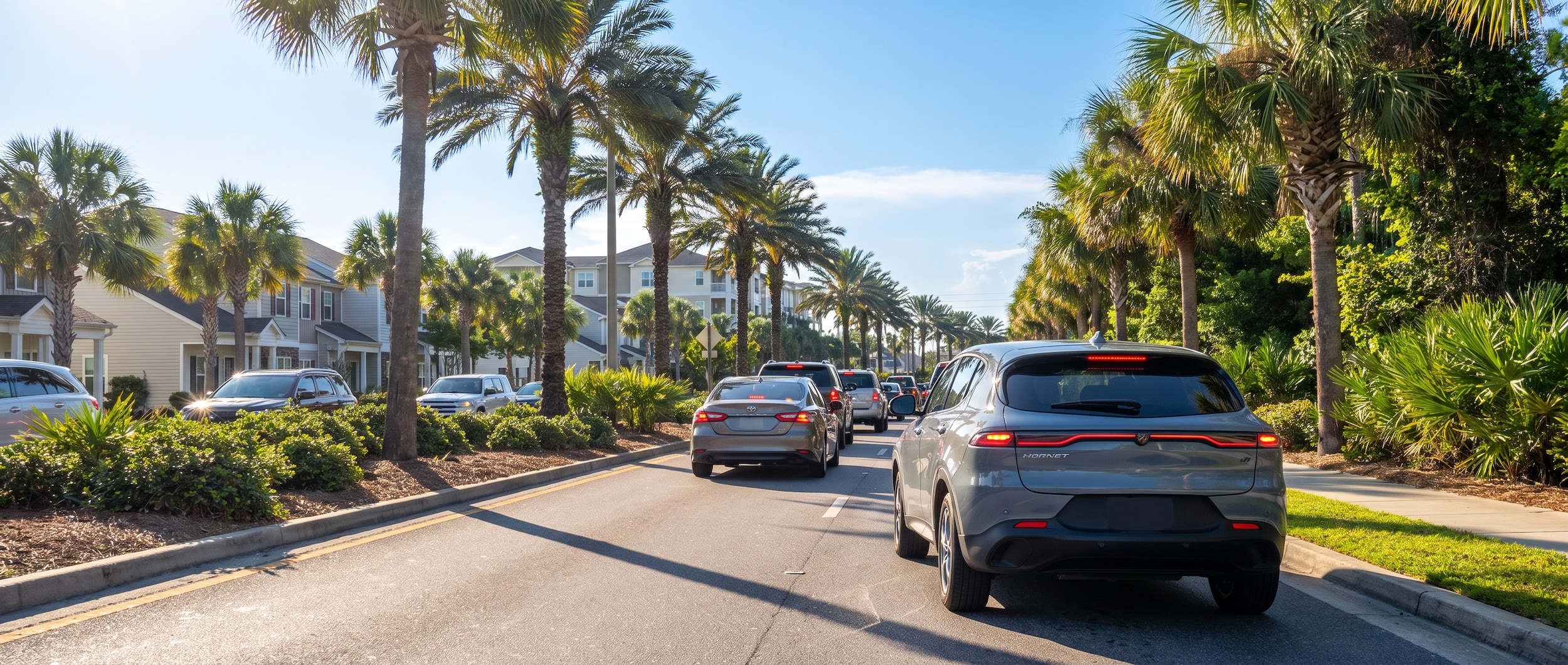
Bay County's summer corridors -- the Hathaway Bridge, Back Beach Road, and Front Beach Road -- mix vacation traffic, sudden downpours, and constant lane changes. The safe way through is simple: let the Hornet's standard driver aids handle the repetitive work, keep your own eyes on the tourists, and know the two conditions that can sideline those aids.
That last part matters more this year than ever. Dodge built the Hornet through the 2025 model year and production has ended, so the final-year Hornet models in new inventory are a finite pick for Panama City drivers who want a compact SUV with this much standard safety equipment. Every one of them left the factory with forward collision warning with automatic emergency braking, lane keeping assistance, blind-spot monitoring with rear cross path detection, and adaptive cruise control -- Dodge lists the full suite as standard across GT and R/T trims.
Do This, Not That on Bay County's Summer Corridors
Panama City Beach draws more than 6 million visitors a year, and most of them cross the same bridge and the same parkway you use to get to work. The table below maps each summer situation to the move that works.
| Situation | Do | Don't |
|---|---|---|
| Hathaway Bridge merge | Check the blind-spot light, signal, commit smoothly | Drift between lanes hunting the faster one |
| Stop-and-go on Back Beach Road | Set adaptive cruise to its longest follow gap | Ride the bumper ahead to block cut-ins |
| Front Beach Road crowds | Slow early near crosswalks and rental scooters | Trust automatic braking to cover inattention |
| Sudden afternoon downpour | Add space yourself; expect adaptive cruise to pause | Assume the sensors see what you cannot |
| Low evening sun heading west | Clean the windshield camera zone before you leave | Ignore an ACC Temporarily Blocked alert |
| FDOT widening work zones | Follow the posted shifts at your own pace | Lean on lane assist where the paint is patchy |
The Technique That Matters Most: Manage the Gap, Not the Brakes
On a jammed summer afternoon, the single highest-value habit is setting the Hornet's adaptive cruise control to its longest following distance and leaving it there. The system holds the gap through the crawl across the bridge, which keeps you from the accelerate-brake cycle that causes most rear-end taps in beach traffic. Automatic emergency braking stays in reserve behind it -- a backup, never the plan.
Honesty helps here, and Hornet owners are direct about it: the adaptive cruise and lane systems read the road with a camera plus radar, and they can pause in heavy rain, dense fog, or direct low sun, or where lane paint is faded. The National Weather Service's Gulf Coast forecast pattern makes quick afternoon thunderstorms the July default, not the exception. So treat the aids as a second set of eyes with known blind moments: when the cluster shows the system has paused, the following distance is yours again -- lift off and widen the gap.
A pre-beach-run routine keeps those pauses rare:
- Wipe the windshield zone in front of the rearview mirror, where the camera lives, and clear the front sensors of salt film and love bugs.
- Set the adaptive cruise follow distance to its longest setting before you roll, not on the bridge.
- Adjust mirrors so the blind-spot lights sit in your natural glance line.
- Time the trip around the peaks -- beach-bound traffic stacks up late morning, and the return flow builds from late afternoon.
- Decide your rain plan in the driveway: if a storm drops visibility, you slow down first and let the tech catch up.
The same core aid family runs across the lot's other SUVs, so the habits transfer. The Jeep Compass pairs a comparable camera-and-radar suite with more ground clearance for sandy side streets, and the Jeep Grand Cherokee brings the same discipline to a roomier package for families running the 30A corridor every weekend. If your Hornet's sensors are throwing pause messages on clear days, that is a calibration visit, not a quirk to live with.
Schedule a Sensor and Wiper Check
The Recap That Fits on a Sticky Note
Longest follow gap on, eyes up for pedestrians, and the moment rain or glare pauses the tech, the gap becomes your job again. That is the whole discipline, and it is why the final-year Hornet remains a smart Bay County pick while they last -- and why more of them will keep surfacing in pre-owned inventory with the same equipment and the same rules.
Drive the bridge like everyone around you is on vacation. They are.