




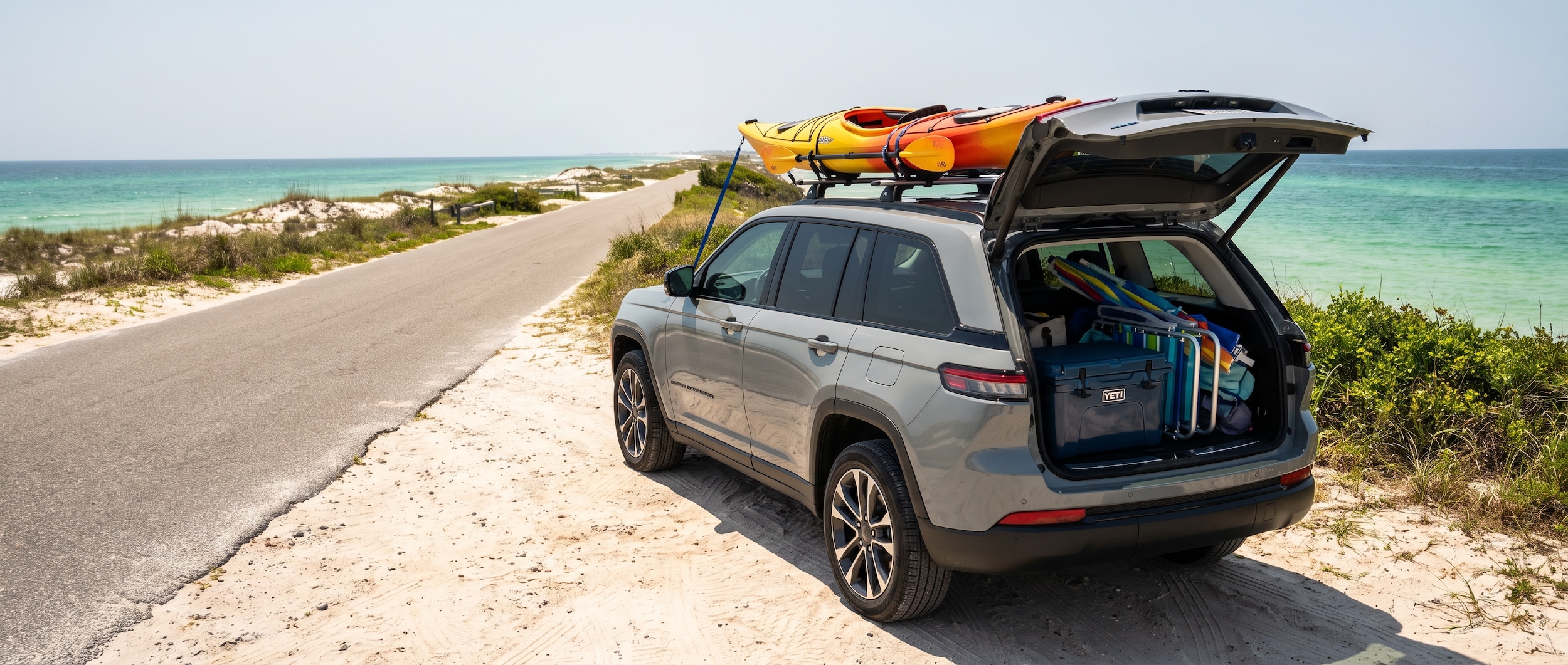
Panama City to Cape San Blas is roughly 60 miles and an hour and a half of driving -- but the real prep question isn't how long the drive is. It's whether you show up with everything you need and a vehicle that can handle soft-sand parking areas, a full load of gear, and a narrow peninsula road that offers very little margin for turning around. The 2026 Jeep Grand Cherokee handles all of it. Use this checklist before you leave the driveway.
What Goes on the Cape San Blas Prep Checklist?
Pack these items and verify each before you load up. Check off anything already in the Grand Cherokee's cargo area, then work down the rest:
Vehicle and Route
- [ ] Tank at least three-quarters full before you leave Panama City -- fuel options thin out east of Port St. Joe along CR-30E
- [ ] GPS set for Cape San Blas Road (CR-30E) off US-98; the peninsula has limited cell signal once you clear Port St. Joe
- [ ] Gulf County runs on Eastern Time -- set your phone alarm to that time zone before leaving so you don't miscalculate activity windows
- [ ] Selec-Terrain dial verified: rotate to Mud/Sand mode if you plan to pull into soft-sand parking areas along the peninsula
- [ ] Tire pressure checked -- on-road pressures are correct for the drive; do not deflate standard road tires for beach parking at public access points
Gear and Cargo
- [ ] Cooler loaded and stowed -- the Grand Cherokee carries 37.7 cubic feet of cargo behind the second row with seats up, which fits a large hard-sided cooler plus beach bags without folding anything
- [ ] Beach umbrella, folding chairs, and towels -- with rear seats folded, cargo expands to 70.8 cubic feet; kayaks or paddleboards on a roof rack or a small trailer hitch carrier clear easily
- [ ] Dry bag or waterproof tote for phones, keys, and anything that cannot get wet -- Gulf surf can be deceptive at the public access points
- [ ] Reusable water jugs (fill at home) -- supplies are available in Port St. Joe, but options on the Cape itself are very limited
- [ ] Insect repellent -- no-see-ums and mosquitoes peak in July near the wooded areas and dune lines
St. Joseph Peninsula State Park
- [ ] Day-use entrance fee confirmed -- St. Joseph Peninsula State Park charges a small per-vehicle fee; have cash or card ready at the entrance station
- [ ] Park opens at 8 AM and closes at sunset -- leave Panama City by 6:30 AM to beat July tourist traffic on US-98 and arrive when parking is still easy to find
- [ ] Scalloping gear if you want it: scallop season at St. Joseph Bay runs July 1 through September 24, making July the perfect window for a mask-and-snorkel hunt in shallow bay water
- [ ] Florida fishing license if you plan to fish (non-residents require one; available online before you leave)
Safety and Comfort
- [ ] SPF 50+ sunscreen -- July UV index on the Gulf Coast regularly hits extreme levels; reapply every two hours
- [ ] First-aid kit (already in the vehicle's cargo area, ideally)
- [ ] Fully charged phone and a portable battery pack -- cell service near the tip of the Cape is intermittent
Why These Items Matter for This Specific Drive
The route from Panama City follows US-98 southeast -- a mostly two-lane road through pine forest and small coastal towns -- before connecting to SR-30A and then CR-30E, the narrow road that runs the length of the Cape. The drive is genuinely scenic and generally uncrowded by Panhandle standards, but July summer traffic can back up around Mexico Beach and Port St. Joe on weekends.
Confirm your Grand Cherokee is road-ready before a summer haul like this. The combination of heat, a loaded cargo bay, and stop-and-go US-98 traffic is exactly the kind of trip where a neglected service interval makes itself known.
The Mud/Sand mode question. The Selec-Terrain system on the Grand Cherokee offers five drive modes -- Auto, Sport, Rock, Snow, and Mud/Sand -- selectable with a single dial. Mud/Sand mode adjusts throttle mapping and traction control to keep the wheels from spinning out under you on the looser surfaces around the Cape's public parking pull-offs. The Laredo 4x4 and above trims carry Quadra-Trac II with Selec-Terrain, which is what makes this mode available. On Laredo 4x4 and Summit trims, the Quadra-Lift air suspension can raise ground clearance from a standard 8.4 inches up to 10.9 inches -- a genuine advantage when you're easing over a sandy berm to reach a bay-side parking area.
See current Grand Cherokee trims in stock to confirm which 4x4 system your configuration carries.
Cargo math for a family beach day. The Grand Cherokee's 37.7-cubic-foot cargo hold behind the second row fits a family's worth of gear without asking anyone to hold anything on their lap. Fold the rear seats flat and you're at 70.8 cubic feet -- enough for a kayak-and-paddleboard setup that won't require a separate rental trailer. The Jeep lists a maximum tow rating of 6,200 pounds with the 2.0L Hurricane Turbo 4 and Trailer Tow Package, which means even a full-size kayak trailer pulls comfortably within spec.
| Item | Why It Matters on This Trip |
|---|---|
| Mud/Sand drive mode | Prevents wheel spin on soft-sand parking areas along CR-30E pull-offs |
| 37.7 cu ft cargo (seats up) | Fits large cooler, chairs, umbrella, and beach bags without folding |
| 70.8 cu ft cargo (seats folded) | Clears a kayak, paddleboard, or camping-scale load in one run |
| Up to 10.9 inches ground clearance (air susp.) | Handles sandy berms and unpaved lateral access roads |
| Selec-Terrain 5-mode system | One dial covers the asphalt drive, the sand lot, and anything in between |
| 6,200 lb tow rating (with Trailer Tow Package) | Pulls a kayak or small boat trailer to the bay-side launch at Salinas Park |
| Full fuel tank leaving Panama City | Gas is available in Port St. Joe; scarce on the Cape proper |
| Eastern Time awareness | Gulf County is Eastern Time; set alarms accordingly or you'll miss the park's 8 AM open |
A Print-and-Go Recap Before You Leave the Driveway
Everything above collapses into four quick checks. Run through them the morning of your trip:
- Fill the tank and check tire pressure in Panama City -- there's a reasonable stop in Port St. Joe if you forget, but beyond that the Cape offers very little.
- Load the cargo bay in layers: cooler and heaviest items flat on the floor, chairs and umbrella upright, dry bag with valuables on top and accessible.
- Set Selec-Terrain to Mud/Sand before you leave the paved road for any sandy access point; switch back to Auto once you return to pavement.
- Leave by 6:30 AM on weekends to clear US-98 summer traffic and arrive at St. Joseph Peninsula State Park when parking is open and the scallop-season crowds haven't yet filled the bay-side areas.
The Grand Cherokee handles the full range of what Cape San Blas asks of a vehicle. If you want a more purpose-built off-road option, that's a conversation worth having too -- but for a family day trip that includes cargo, comfort, and a 90-minute highway run each way, the Grand Cherokee is the practical answer.
See Current Specials on the Grand Cherokee
Frequently Asked Questions
How far is Cape San Blas from Panama City, and what road do you take?
Cape San Blas is approximately 60 miles southeast of Panama City. The standard route follows US-98 east to SR-30A, then connects to CR-30E (Cape San Blas Road), which runs the length of the peninsula. In light traffic, the drive takes about an hour and a half. July weekend traffic around Mexico Beach and Port St. Joe can add 15 to 30 minutes, so an early departure is worth it.
Does the Jeep Grand Cherokee need 4x4 engaged to park at Cape San Blas?
You do not need to engage 4x4 low range for standard beach day parking at Cape San Blas public access points -- these are pull-off areas, not deep-sand driving situations. On 4x4-equipped Laredo Altitude and above trims, switching the Selec-Terrain dial to Mud/Sand mode before leaving pavement gives you the right throttle and traction settings for loose surfaces without any additional steps. Salinas Park and the public access points along CR-30E have compacted pull-off areas that the Grand Cherokee handles on all-season tires without drama.