





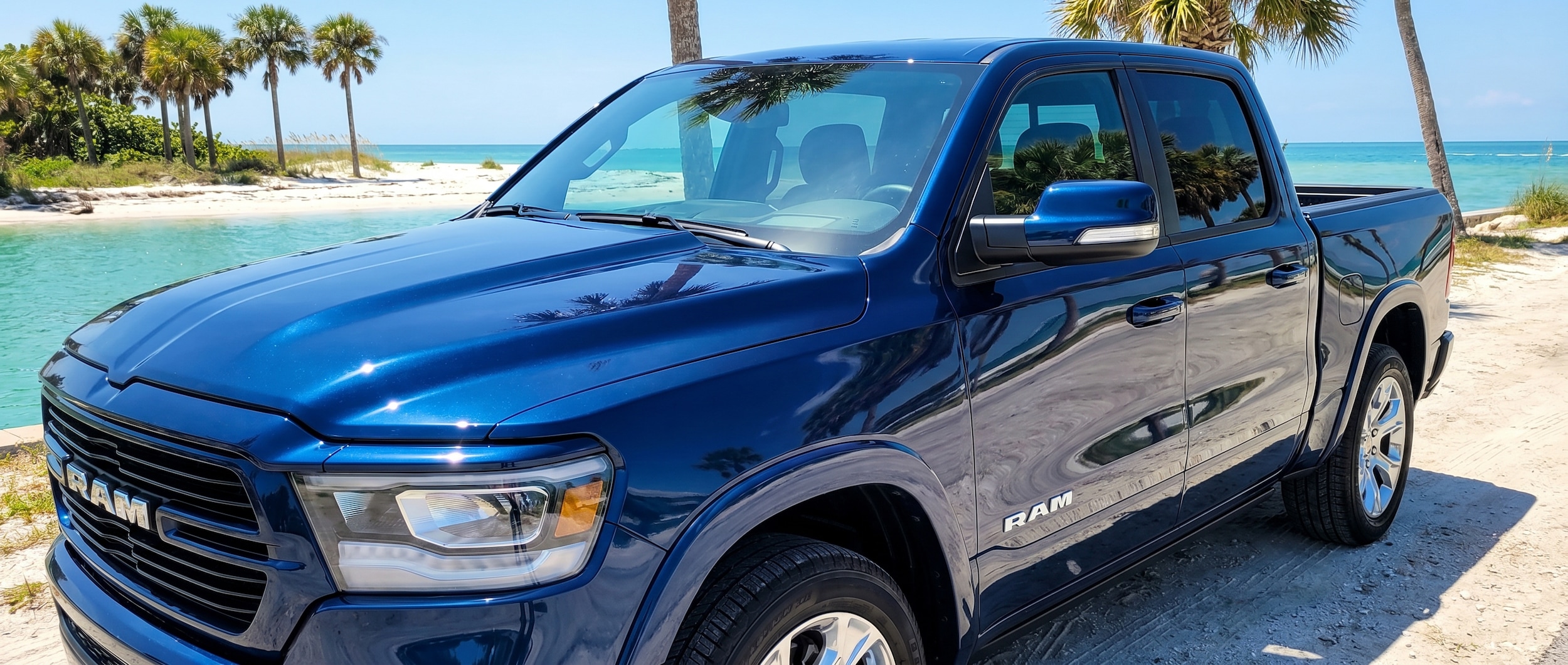
Panama City, FL sits in one of the harshest environments a vehicle's paint can face - intense UV radiation, high humidity, salt air drifting in from the Gulf, and sudden afternoon downpours that leave water spots baked on by the next morning's sun. Protecting your car's paint in Panama City isn't optional if you want to maintain your vehicle's appearance and long-term value. This guide breaks down the real difference between wax and ceramic coating so you can make the right call for your situation.
Why Panama City's Climate Is Harder on Paint Than Most Drivers Realize
Florida receives more UV exposure per year than nearly any other state in the continental U.S., and Bay County's coastal position adds salt air to the equation. UV rays break down the clear coat layer that protects your paint, while salt accelerates oxidation and speeds up the fading process. It's a combination that strips unprotected paint faster than you'd expect.
If you've spent time near Frank Brown Park or parked near the beaches along Front Beach Road, you've probably noticed how vehicles that sit exposed for months start looking dull and chalky. That oxidation isn't just cosmetic - once the clear coat is compromised, moisture works its way into the base coat, and the cost to fix it climbs fast.
Panama City's summer rain patterns also create a specific problem worth understanding. When a storm rolls in off the Gulf, drops of water mixed with road film and salt residue land on your hood and doors. When the sun returns minutes later, that contaminated water evaporates and leaves behind a concentrated deposit directly on your paint. Over time, those water spots etch into the clear coat permanently.
Did you know? UV radiation is responsible for approximately 80% of exterior paint degradation on vehicles in high-sun states. Florida consistently ranks among the top five states for UV-related paint damage based on NHTSA vehicle condition research.
What Wax Actually Does - And Where It Falls Short
Wax has been the standard paint protection method for decades, and it still has a legitimate place in vehicle care. Traditional carnauba wax creates a thin sacrificial layer on top of your clear coat that repels water, reduces friction from dust and debris, and gives paint a warm, deep shine.
Here's what wax does well:
- Provides UV protection for short-term periods (typically 1-3 months)
- Enhances paint depth and gloss with a warm, natural finish
- Relatively affordable upfront with products available at most auto parts stores
- Easy to apply yourself on a Saturday morning
- Works well as a quick refresh before selling a vehicle or attending a show
The honest limitation is durability. In Panama City's climate, a quality wax application typically holds for 6 to 12 weeks before it degrades enough to leave your paint exposed. Wash your vehicle regularly, add in some Gulf-side driving, and that window shortens further. You're essentially committing to a recurring maintenance routine three to four times per year at minimum.
Synthetic paint sealants offer a middle ground - they last longer than carnauba wax (often 4-6 months) and provide more consistent UV blocking, but they still require regular reapplication and don't approach the durability of a ceramic coating.
| Protection Type | Durability | UV Protection | Water Repellency | DIY Friendly |
|---|---|---|---|---|
| Carnauba Wax | 6-12 weeks | Moderate | Good | Yes |
| Synthetic Sealant | 4-6 months | Good | Very Good | Yes |
| Ceramic Coating | 2-5 years | Excellent | Excellent | No (professional recommended) |
What Ceramic Coating Is and Why It Performs Differently
Ceramic coating is a liquid polymer that bonds chemically to your vehicle's clear coat rather than sitting on top of it. Once cured, it forms a hard, semi-permanent layer with a hydrophobic surface that causes water, dirt, and contaminants to bead up and roll off rather than bond to the paint.
The difference in real-world performance comes down to that chemical bond. Wax sits on the surface and wears away. Ceramic coating integrates with the clear coat at a molecular level, which is why its protection window is measured in years rather than weeks.
For a Jeep Grand Cherokee® or a Ram 1500® that spends time on unpaved roads near St. Andrews State Park or makes regular runs down U.S. Highway 98 through the coastal corridor, ceramic coating offers meaningful daily protection without constant maintenance.
What ceramic coating protects against:
- UV rays that cause oxidation and color fade
- Salt air and environmental fallout near the Gulf Coast
- Water spots from Florida's unpredictable rain-then-sun cycles
- Light scratches and swirl marks from washing
- Bird droppings and tree sap (which are chemically aggressive to clear coat)
- Road tar and bug splatter
Pro tip: Ceramic coating does not make paint scratch-proof or bulletproof. It reduces the severity and frequency of light surface damage, but it won't prevent deep scratches from parking lot incidents or rock chips at highway speeds. Paint protection film (PPF) addresses those specific vulnerabilities.
Wax vs. Ceramic: Matching the Right Protection to Your Situation
The right choice depends on how you use your vehicle, how much time you want to spend on maintenance, and how long you plan to keep it.
Wax makes sense when:
- You enjoy detailing your vehicle as a weekend activity
- You're protecting a vehicle you plan to sell within a year
- You want a lower upfront cost and don't mind reapplying seasonally
- You drive a classic or show vehicle where traditional wax aesthetics matter
Ceramic coating makes sense when:
- You want years of protection without monthly maintenance
- You park outside regularly near the coast or in direct Panama City sun
- You're keeping your vehicle for three or more years and want to preserve resale value
- You drive a work vehicle like a Ram 2500 that takes real-world abuse and needs durable protection
- You want to simplify washing - ceramic-coated surfaces rinse cleaner with less effort
The upfront cost of professional ceramic coating is higher than wax, but when you factor in labor, product costs, and time over a three-year period, the math often favors ceramic for drivers who want reliable, low-maintenance protection.
How Panama City-Area Driving Conditions Should Factor Into Your Decision
The stretch of vehicle life between St. Andrews Bay and the eastern edge of Bay County covers a lot of environmental variety. If your daily commute takes you across the Hathaway Bridge, your vehicle faces salt mist on a regular basis. Drivers coming in from Callaway or Parker who spend time near the industrial port corridor deal with airborne particulates that settle on paint surfaces.
Summer road trips to Panama City Beach along Front Beach Road mean bug splatter at speed and UV exposure in open parking lots with no shade relief. Fall and winter bring less humidity but still-intense UV levels that most drivers underestimate because the temperature drops.
These aren't theoretical concerns - they're the everyday reality for vehicles registered in Bay County. A well-maintained wax schedule can manage these conditions, but it requires consistency. Ceramic coating handles them passively once the initial application is complete.
Take a look at our schedule service page if your vehicle is overdue for a paint inspection or detail consultation - catching early oxidation before it deepens is much easier than correcting it after the damage is done.
Preparing Your Paint Before Any Protection Goes On
This step matters more than most drivers realize, and it applies whether you're choosing wax or ceramic coating. Protection products seal whatever is already on the surface. If you apply wax over existing swirl marks, oxidation spots, or water stain etching, those imperfections get locked in rather than corrected.
Before wax application:
- Wash thoroughly with a pH-neutral car shampoo to remove surface contamination
- Clay bar treatment to remove bonded contaminants that washing leaves behind
- Polish if needed to address light swirl marks or dull spots before sealing
- Apply wax in thin, even coats in a shaded area - never in direct sun
Before ceramic coating (professional process):
- Paint decontamination wash to strip oils and residues
- Iron fallout remover to clear embedded metal particles common in coastal environments
- Clay bar treatment across the entire surface
- Multi-stage paint correction to remove swirl marks and scratches
- Coating application in a climate-controlled environment with proper cure time (typically 24-48 hours)
Did you know? Ceramic coatings require a surface temperature between 50°F and 80°F for proper chemical bonding. Panama City's summer heat makes indoor application essential - attempting ceramic coating in direct Florida sun can cause premature curing and uneven coverage.
Common Questions About Car Paint Protection in Panama City, FL
How often should I wax my car in Panama City, FL?
In Panama City's climate, plan to apply a quality wax or paint sealant every 6 to 12 weeks. The combination of intense UV exposure, salt air from the Gulf, and Florida's summer rain patterns degrades wax faster than in inland or northern climates. A synthetic paint sealant extends that window to 4-6 months and offers more consistent UV protection between applications.
Is ceramic coating worth it for vehicles driven in Panama City, FL?
For most drivers in Panama City who park outside regularly and plan to keep their vehicles for three or more years, ceramic coating is worth the upfront investment. The protection it provides against UV oxidation, salt air, and water spotting directly addresses the specific conditions Bay County vehicles face daily. It also reduces long-term maintenance time and helps preserve resale value.
Can I apply ceramic coating myself, or do I need a professional?
Consumer-grade ceramic coating products exist, but professional application is strongly recommended. Professional installers perform multi-stage paint correction before coating, ensuring the surface is flawless before the coating bonds. A DIY coating applied over existing swirl marks or surface contamination locks those imperfections in permanently and reduces the effectiveness and longevity of the coating.
Does wax protect against the salt air near Panama City Beach?
Wax provides a temporary barrier against salt air, but it must be reapplied consistently to remain effective. Salt air is persistent - it doesn't take long for a worn wax layer to let salt residue reach the clear coat and begin promoting oxidation. Drivers who frequently park near the beach or cross water regularly on routes like the Hathaway Bridge benefit most from more durable protection options.
Will ceramic coating prevent rock chips on my Jeep or Ram?
Ceramic coating does not prevent rock chips or deep scratches from road debris. It adds hardness to the clear coat surface and reduces light surface damage from washing and daily contact, but it won't absorb the impact of a rock at highway speed. Paint protection film (PPF) is the appropriate solution for chip protection, and some drivers use both - PPF on high-impact areas with ceramic coating over the rest of the vehicle.
How do I maintain a ceramic-coated vehicle in Panama City's weather?
Ceramic-coated vehicles require less maintenance than waxed vehicles, but they're not care-free. Wash regularly with a pH-neutral soap, avoid automatic car washes with abrasive brushes, and rinse off bird droppings or sap quickly since these are acidic enough to degrade coating over time. An annual ceramic maintenance spray boosts the hydrophobic properties and extends the coating's effective life.
Making the Right Call for Your Vehicle's Long-Term Appearance
Panama City's sun isn't going anywhere, and neither is the salt air coming off St. Andrews Bay. The vehicles that hold their appearance and value over time in this environment are the ones whose owners made a deliberate decision about paint protection rather than waiting until fading and oxidation forced the issue.
Wax is a reliable, affordable tool used consistently. Ceramic coating is a long-term investment that pays off for drivers who want strong protection without the recurring effort. Both beat doing nothing by a wide margin.
The team at Bay Chrysler Dodge Jeep Ram can connect you with service resources and point you toward trusted local detailers who understand what Bay County vehicles go through. Your paint is worth protecting - and starting sooner is always better than waiting until the damage shows.
Categories:
Social