





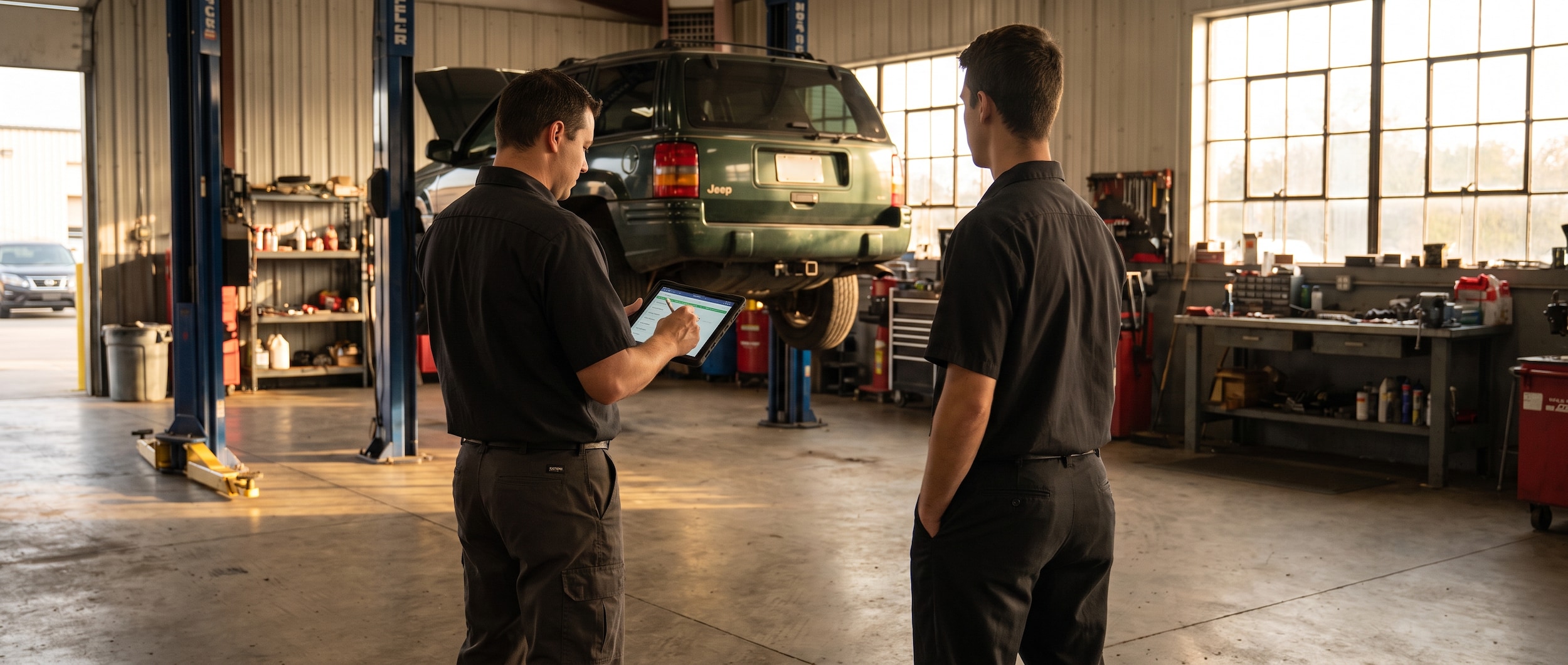
Most people find out their maintenance schedule was wrong the hard way - an overheated engine on US-98 in July, a dead battery in the Walmart parking lot off 23rd Street, or a transmission that starts slipping after too many skipped services. Staying ahead of maintenance in Panama City, FL isn't just about following the sticker on your windshield. Florida's heat, humidity, and stop-and-go coastal traffic demand a more thoughtful approach to how often you service your vehicle and what you prioritize.
Why Florida Heat Makes Your Maintenance Schedule Different
Your vehicle's factory maintenance schedule was written for average conditions - and Panama City is anything but average from May through September.
Extreme heat accelerates fluid breakdown, strains cooling systems, and shortens battery life significantly. The combination of high ambient temperatures, direct sun exposure, and the kind of stop-and-go traffic you'll find heading toward Pier Park or along Thomas Drive during peak summer means your engine is working harder than it would in a cooler climate. That extra workload shortens the effective life of your oil, your coolant, and your brake fluid faster than the printed interval assumes.
Here's something most drivers don't realize: the "severe service" category in your owner's manual isn't reserved for people hauling construction materials or off-roading. If you regularly drive in temperatures above 90°F, make frequent short trips under 10 miles, or spend significant time in slow traffic, you likely qualify for the more frequent severe service schedule - even if every drive feels routine to you.
Did you know? AAA research shows that extreme heat can be harder on vehicles than extreme cold. Temperatures above 95°F accelerate the chemical breakdown of engine oil, reducing its lubrication effectiveness well before the mileage limit is reached.
The Core Maintenance Intervals Every Driver Should Track
Understanding your maintenance schedule starts with knowing which services matter most and roughly when they're due.
| Service | Standard Interval | Severe/Florida Recommendation |
|---|---|---|
| Engine Oil (Conventional) | 3,000-5,000 miles | 3,000-4,000 miles |
| Engine Oil (Synthetic) | 7,500-10,000 miles | 5,000-7,500 miles |
| Tire Rotation | Every 5,000-7,500 miles | Every 5,000 miles |
| Cabin Air Filter | 15,000-25,000 miles | 12,000-15,000 miles |
| Engine Air Filter | 15,000-30,000 miles | 12,000-20,000 miles |
| Brake Fluid | Every 2 years | Every 1-2 years |
| Coolant Flush | Every 30,000-50,000 miles | Every 30,000 miles |
| Battery Inspection | Every 2 years | Annually |
| Transmission Fluid | Every 30,000-60,000 miles | Per owner's manual |
These are general guidelines. Your specific model's owner's manual is always the definitive source for your vehicle's recommended intervals.
The items that tend to catch Panama City drivers off guard most often are battery health, coolant condition, and cabin air filters. All three degrade faster in sustained heat - and all three are easy to forget because there's no obvious warning until something goes wrong.
Oil Change Intervals: What the Sticker Doesn't Tell You
Oil change frequency is probably the most debated maintenance topic, and for good reason - the answer genuinely depends on how and where you drive.
Modern synthetic oils used in vehicles like the Jeep® Grand Cherokee and Ram 1500 can legitimately go 7,500 to 10,000 miles under ideal conditions. The problem is that Panama City conditions often push drivers closer to the severe service category than they realize. Short trips from the Cove neighborhood into downtown, extended idling in beach traffic on Front Beach Road during summer, or hauling gear out to St. Andrews State Park on weekends all add up to harder work for your oil.
A good rule of thumb for local drivers:
- Full synthetic oil: Aim for 5,000-6,000 miles if you do mostly city and coastal driving
- Conventional oil: Stay close to 3,000-4,000 miles during summer months
- Mixed driving (highway + city): Check your oil condition at the 4,000-mile mark and make the call
What matters most isn't just the mileage number - it's the condition of the oil. Dark, gritty oil that smells burnt has already lost much of its protective quality regardless of where the odometer sits.
Pro tip: Pull your dipstick and check oil color and consistency every few weeks, especially during summer. Fresh oil is amber. Oil that's turned dark brown or black and has a gritty texture needs to be changed, period.
Battery and Cooling System: The Two Services Most Drivers Skip
Heat is the number one killer of car batteries - not cold weather, as most people assume.
The average car battery lasts 3-5 years under normal conditions, but in Florida's climate, that range often shortens to 3-4 years for drivers in the Panama City area. High temperatures cause the fluid inside the battery to evaporate and accelerate internal corrosion. The tricky part is that a heat-damaged battery often tests fine right up until the day it fails completely.
Battery health checks should be part of your annual service routine here, not just when you notice slow cranking. Most service departments can perform a load test in minutes that tells you exactly how much capacity your battery has left.
Your cooling system deserves equal attention. Coolant breaks down over time and loses its ability to prevent corrosion inside the engine. Driving through summer in Bay County with degraded coolant is a risk that shows up as a roadside overheat rather than a warning light - by the time the temperature gauge spikes, you're already dealing with a problem.
The cooling system checklist every Panama City driver should run annually:
- Coolant concentration and freeze point tested (yes, even in Florida - proper concentration prevents boiling too)
- Visual inspection for leaks at hoses and the radiator
- Thermostat function verified
- Radiator cap pressure test
- Water pump for signs of weeping or play in the bearing
Tires and Brakes: What Panama City Road Conditions Actually Demand
Brake fade and tire wear both accelerate in sustained heat - and the roads between Panama City and Panama City Beach see more than their share of both.
Tire pressure drops approximately 1 PSI for every 10°F drop in temperature, but the summer heat cycle in northwest Florida causes its own problems. Tires that are slightly overinflated when cold can become dangerously overinflated when the road surface temperature climbs above 130°F on a summer afternoon. Check tire pressure in the morning before driving, not after the vehicle has been sitting in the sun.
Rotation every 5,000 miles is the right call for most local drivers. Uneven wear patterns develop quickly when you're making frequent turns in parking lots, crossing the Hathaway Bridge on a regular commute, or driving on roads with pavement inconsistencies near the beach areas.
For brakes, pay attention to these warning signs:
- Squealing or grinding sounds when stopping
- A soft or spongy feeling in the brake pedal
- Pulling to one side when braking
- Visible scoring or deep grooves on brake rotors
- Brake dust buildup that looks uneven side-to-side
Brake fluid is hygroscopic, meaning it absorbs moisture from the air over time. In a humid coastal environment like Panama City, brake fluid can absorb enough water in 12-18 months to lower its boiling point significantly - which matters most when you need hard stops.
How to Read Your Owner's Manual Like a Maintenance Professional
Your owner's manual has a maintenance schedule section that most people open once and never look at again.
Here's what to actually focus on when you open it:
- Find the two-schedule system
Most modern vehicles list both a "Normal" schedule and a "Severe/Special" schedule. Identify which one applies to your driving before you do anything else. - Note the time-based intervals, not just mileage
Many services have a time limit in addition to a mileage limit - whichever comes first. Brake fluid might say "every 30,000 miles or 2 years." If you only drive 8,000 miles per year, the 2-year mark is what triggers the service. - Flag the services that apply to your vehicle's features
Four-wheel drive systems, diesel engines, towing packages, and turbocharged engines all have additional service items that standard schedule tables sometimes omit. If your Ram 1500 has a diesel engine or a towing package, those systems have specific service intervals you won't find in the basic oil-change reminder. - Build a simple tracking log
A note on your phone or a piece of paper in the glove box with the date and mileage of your last five services is worth more than any sticker on your windshield. It takes 30 seconds to update and gives you an accurate picture of what's due and when.
Did you know? Chrysler, Dodge, Jeep, and Ram vehicles use an Oil Life Monitoring System that calculates oil change intervals based on actual driving conditions rather than a fixed mileage schedule. In Florida driving conditions, this system may recommend changes more frequently than the maximum interval because it factors in heat, idle time, and driving patterns.
When to Schedule Service Even If Nothing Feels Wrong
Preventive maintenance is harder to motivate yourself to do precisely because everything seems fine right up until it isn't.
The most expensive repair stories almost always involve something that was showing early signs for months before it became a breakdown. The Ram truck that needed a full cooling system replacement could have been a simple coolant flush and hose replacement a year earlier. The Jeep that needed a new battery and alternator was probably showing slow cranking on hot mornings for a few weeks before it died.
The honest answer is that scheduled service protects you financially, not just mechanically. Parts replaced at appropriate intervals cost a fraction of what emergency roadside repairs and towing cost - especially during summer when service shops across Bay County get busy fast.
If you're not sure where your vehicle stands, it's time to schedule service for a multi-point inspection. A thorough inspection gives you a clear picture of what's in good shape, what needs attention soon, and what can wait - so you're making informed decisions rather than guessing.
Common Questions About Maintenance Schedules in Panama City, FL
How often should I change my oil in Panama City, FL with a Jeep or Ram?
Most Jeep and Ram drivers in Panama City should change their oil every 5,000 to 6,000 miles when using full synthetic, or every 3,000 to 4,000 miles with conventional oil. Florida's heat and coastal humidity push most local driving into the severe service category, which means shorter intervals than what the basic schedule suggests. If your vehicle uses the Oil Life Monitoring System, follow its alerts but don't wait past 7,500 miles in summer conditions.
Does the humidity in Panama City affect my vehicle's maintenance needs?
Yes, coastal humidity in Panama City, FL directly affects several key systems. Brake fluid absorbs moisture from the air and should be inspected and often replaced every 12-18 months in humid coastal environments. Cabin air filters also clog faster in high-humidity areas because moisture causes particulates to clump together. Metal components in the undercarriage and exhaust benefit from periodic inspection for early corrosion signs, especially on vehicles that spend time in salt air near the beach areas.
How do I know if my Chrysler, Dodge, Jeep, or Ram needs severe service intervals?
Your vehicle qualifies for severe service intervals if you regularly experience any of these conditions: driving in temperatures consistently above 90°F, making frequent short trips under 10 miles, extended idling in heavy traffic, driving on dusty or unpaved roads, or towing or hauling regularly. Most Panama City drivers meet at least two or three of these criteria during summer months, which means the severe service schedule is typically the right choice.
What maintenance is most important before a Florida summer road trip?
Before a summer road trip from Panama City, prioritize these services: oil and filter change, battery load test, coolant level and concentration check, tire pressure and tread depth inspection, brake inspection, and air conditioning system check. Florida interstate driving in summer puts sustained stress on your cooling system and tires in ways that shorter local trips don't. Having these verified before you leave gives you one less thing to worry about on I-10.
How often should I rotate tires on a Ram 1500 or Jeep in Panama City driving conditions?
Tire rotation every 5,000 miles is the right target for Ram 1500 and Jeep owners in the Panama City area. The combination of heat, coastal road surfaces, and the stop-and-go driving common on 23rd Street and along the beach corridor creates uneven wear faster than highway driving alone. Check your tire pressure monthly and always measure in the morning before driving for an accurate reading.
Where can I get my Chrysler, Dodge, Jeep, or Ram serviced in Panama City, FL?
Bay Chrysler Dodge Jeep Ram offers factory-trained service for all Chrysler, Dodge, Jeep, and Ram vehicles in the Panama City, FL area. The service team is familiar with the specific demands that Florida heat, humidity, and coastal driving place on these vehicles, and can help you determine whether your driving patterns put you on the standard or severe service schedule.
Stay Ahead of the Heat - Your Vehicle Will Thank You
Panama City drivers who follow a smart, Florida-adjusted maintenance schedule consistently avoid the expensive surprises that catch other drivers off guard. The basics aren't complicated: use the right oil interval for your actual driving conditions, keep your cooling system and battery in good shape, rotate your tires regularly, and don't ignore time-based service intervals just because the mileage hasn't arrived yet.
Your owner's manual has the answers - Florida driving conditions tell you which column to follow. The team at Bay Chrysler Dodge Jeep Ram understands what local roads, summer heat, and Bay County driving patterns do to vehicles, and they're ready to help you build a service plan that makes sense for how you actually drive.
Categories:
Social