




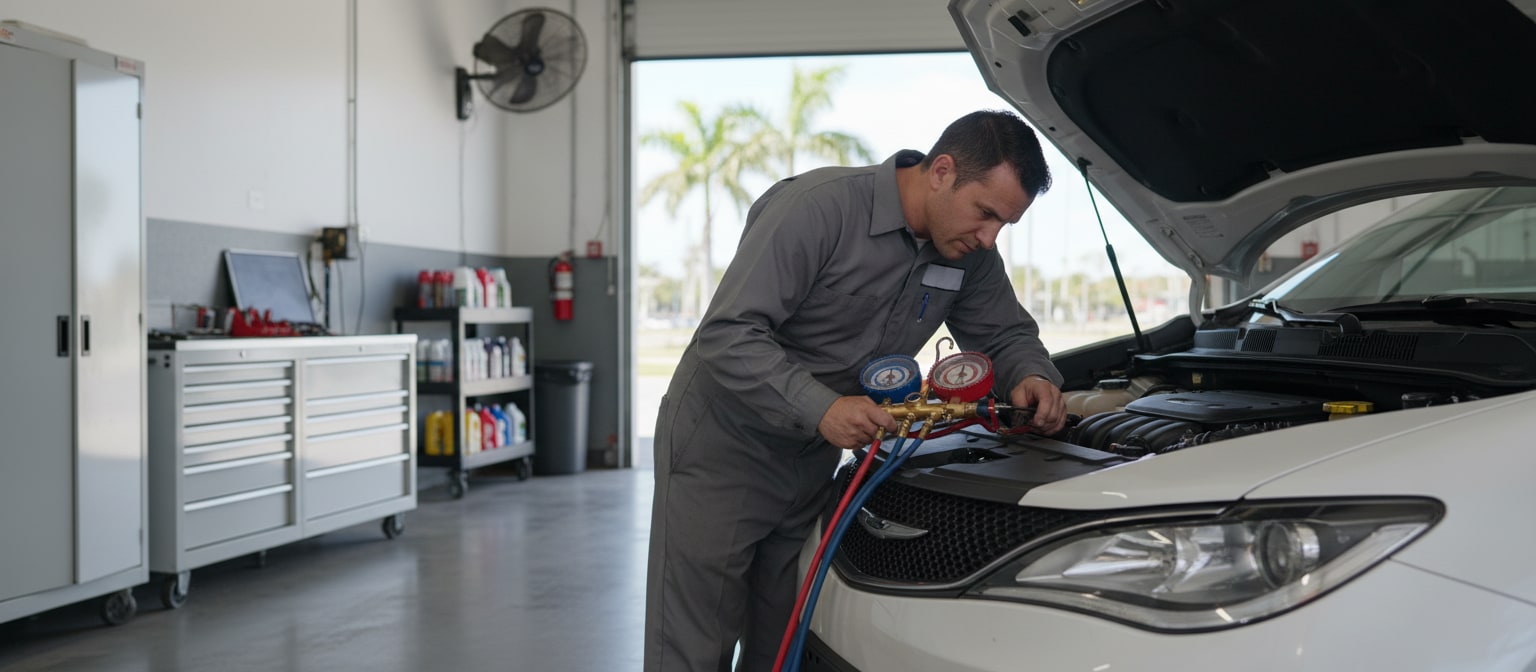
Your vehicle's AC system loses up to 10% of its refrigerant annually through microscopic leaks in the seals and hoses - and that's before Panama City, FL's brutal summer humidity accelerates the problem. With temperatures regularly hitting 95°F and humidity levels that make it feel even hotter, a failing AC system transforms your daily commute into a miserable experience. This guide reveals the warning signs that your AC needs attention before summer arrives, plus maintenance strategies that keep you comfortable whether you're stuck in traffic on Highway 98 or cruising to St. Andrews State Park.
The Hidden AC Problems Florida Drivers Miss
Most drivers only notice AC problems when the system completely fails, but your vehicle broadcasts warning signs weeks or even months before that happens. The challenge is that these early indicators often seem minor - a slightly warmer breeze one day, a musty smell that disappears after a few minutes, or a fan that sounds different than usual. By the time you're sweating through your shirt on the Hathaway Bridge, the damage has progressed from a simple recharge to potentially expensive component replacement.
Here's what makes Florida particularly tough on AC systems: the combination of salt air from the Gulf, constant humidity, and year-round use creates perfect conditions for corrosion and wear. Unlike drivers in Michigan who might run their AC three months per year, Panama City residents use cooling systems nearly every day. This constant cycling puts tremendous strain on components designed for seasonal use.
The compressor, which serves as the heart of your AC system, faces particular challenges in our coastal environment. Salt particles infiltrate the engine bay, accelerating corrosion on aluminum components. Meanwhile, the extreme temperature swings between a cold morning start and afternoon heat create expansion and contraction cycles that stress seals and connections.
Warning Signs Your AC System Needs Attention Now
Weak airflow often appears first, though many drivers attribute it to hot weather rather than mechanical issues. When your AC blower sounds normal but the air volume feels reduced, the problem usually lies in your cabin air filter - a component that clogs faster here due to pollen from pine trees around Deer Point Lake and construction dust from ongoing development. However, weak airflow can also indicate evaporator freezing, a serious issue that requires immediate professional attention.
Temperature inconsistency reveals developing problems before complete failure occurs. Pay attention if your AC blows cold for the first few minutes, then gradually warms up during your drive. This pattern typically indicates low refrigerant levels, but in a Ram 1500 or Jeep Grand Cherokee, it might also suggest a failing blend door actuator - a common issue in these models that affects temperature control.
Strange noises deserve immediate investigation, not wishful thinking that they'll go away. A clicking sound when you first start the AC often indicates debris in the blower motor, while a grinding noise suggests bearing failure in the compressor. That squealing belt sound that appears only when the AC runs? Your compressor clutch is likely failing, and continuing to operate it risks destroying the entire compressor.
Unusual odors signal more than comfort issues - they indicate potential health concerns. A musty smell suggests mold growth in your evaporator case, common in Florida's humidity. A sweet, syrupy odor often means coolant is leaking into your ventilation system, while a burning smell requires immediate attention as it could indicate electrical problems or seized components.
Your Vehicle's AC Timeline: When Components Typically Fail
Understanding typical component lifespans helps you anticipate problems before they strand you in summer heat. These timeframes apply to normal use, but Panama City's climate often accelerates wear:
| Component | Typical Lifespan | Florida Reality | First Warning Sign |
|---|---|---|---|
| Cabin Air Filter | 12-15k miles | 8-10k miles | Reduced airflow, musty odor |
| Refrigerant | 3-5 years | 2-3 years | Gradual cooling loss |
| Compressor | 8-10 years | 5-7 years | Noise, intermittent cooling |
| Condenser | 10+ years | 7-8 years | Poor highway cooling |
| Evaporator | 10+ years | 8-10 years | Persistent odor, water leaks |
The Dodge Durango and Jeep Wrangler, with their larger cabin spaces, work their AC systems harder than compact vehicles. If you drive these models, consider more frequent AC inspections, especially if you regularly travel with full passenger loads or tow boats to the marina at Grand Lagoon.
Regular maintenance extends these lifespans significantly. Simple tasks like replacing your cabin air filter every 8,000 miles or having your system's refrigerant levels checked annually can prevent most major failures. The service technicians see patterns in AC failures - vehicles that receive annual AC inspections rarely experience sudden summer breakdowns.
The Real Cost of Delaying AC Service
Postponing AC maintenance might save money today, but Florida's heat makes this gamble particularly expensive. A simple refrigerant recharge runs around $100-150, while replacing a compressor damaged by running low on refrigerant can exceed $1,000. The gradual nature of AC decline tricks many drivers into tolerating reduced performance until catastrophic failure forces expensive repairs.
Consider what happens when you run an AC system low on refrigerant: the compressor works harder to maintain cooling, generating excess heat that breaks down lubricating oil. This creates a cascade of wear that damages seals, scores cylinder walls, and eventually seizes the compressor entirely. What started as a minor leak requiring a recharge becomes a major repair requiring component replacement.
Energy efficiency provides another compelling reason for timely service. A properly functioning AC system in your Chrysler Pacifica or Ram 2500 maintains cabin comfort without overworking, preserving fuel economy. When the system struggles due to low refrigerant or clogged filters, your engine works harder to power the compressor, reducing fuel efficiency by up to 3 miles per gallon during city driving.
The hidden costs extend beyond repairs and fuel. Florida's summer heat poses genuine health risks, particularly for:
- Young children who can't regulate body temperature effectively
- Elderly passengers susceptible to heat exhaustion
- Pets traveling to dog-friendly beaches like Pier Park
- Anyone with respiratory conditions aggravated by high humidity
Your vehicle's resale value also suffers from neglected AC maintenance. Pre-purchase inspections immediately reveal AC problems, and Florida buyers won't consider vehicles without perfectly functioning cooling systems. That delayed maintenance could cost thousands in reduced trade-in value when you're ready to upgrade.
Professional AC Service: What Actually Happens
Understanding professional AC service helps you appreciate its value and avoid unnecessary upsells. A comprehensive AC inspection begins with a visual examination of all components, checking for obvious damage, corrosion, or wear. Technicians look for oil residue that indicates refrigerant leaks, damaged condenser fins that reduce efficiency, and worn belts that might fail under load.
Performance testing follows the visual inspection. Using specialized gauges, technicians measure high and low side pressures throughout the system, comparing readings to manufacturer specifications. This reveals internal problems invisible during visual inspection, such as restriction in the expansion valve or contamination in the refrigerant.
The evacuation and recharge process requires professional equipment and expertise. Here's what happens during proper service:
- Recovery - Remove existing refrigerant for recycling, measuring the amount recovered to determine system capacity.
- Vacuum Test - Pull deep vacuum on the system, checking for leaks by monitoring pressure rise.
- Oil Addition - Add precise amount of lubricating oil based on manufacturer specifications.
- Recharge - Fill system with exact refrigerant amount while monitoring pressures and temperature output.
Component cleaning often gets overlooked but makes a significant difference in performance. Technicians clean the condenser fins, removing bugs and debris that accumulated during love bug season. They also treat the evaporator with antimicrobial solutions to prevent mold growth, particularly important in our humid climate.
Extending Your AC Life Through Smart Prevention
Prevention costs far less than repairs, especially for AC systems facing Florida's challenging conditions. Start with simple monthly checks you can perform yourself. Run your AC for at least 10 minutes monthly, even during our mild winters, to keep seals lubricated and prevent refrigerant from settling. This maintains system flexibility and helps identify problems early.
Cabin air filter replacement ranks as the most important maintenance task you can perform yourself. Located behind the glove box in most vehicles, this filter traps pollen, dust, and debris before they enter your AC system. Panama City's combination of construction dust, pine pollen, and sea salt creates a particularly challenging environment for filters. Check yours every 5,000 miles or whenever you notice reduced airflow.
- ✓ Replace cabin air filter every 8,000 miles
- ✓ Clean condenser fins before summer (remove bugs and debris)
- ✓ Check belt tension and condition every oil change
- ✓ Run AC monthly year-round for 10+ minutes
- ✓ Have refrigerant levels checked annually
- ✓ Clean drain tubes to prevent water backup
Parking strategies significantly impact AC longevity. Whenever possible, park in shade or use a windshield sunshade to reduce interior temperatures. This reduces the initial load on your AC system when starting, extending compressor life. The parking garages at Pier Park or Panama City Mall offer covered options that protect your vehicle's interior and AC system.
Consider window tinting to reduce heat load. Florida-legal tinting blocks significant solar energy, helping your AC maintain comfortable temperatures with less effort. This proves especially valuable for larger vehicles like the Dodge Journey or Jeep Grand Cherokee with extensive glass areas.
Common Questions About Vehicle AC in Panama City, FL
How often should I service my Chrysler, Dodge, Jeep, or Ram AC system in Florida's climate?
Service your vehicle's AC system annually, ideally in early spring before Panama City's summer heat arrives. Florida's year-round AC use combined with high humidity accelerates wear compared to seasonal climates. Most manufacturers recommend service every two years, but local conditions justify annual inspection and refrigerant level checks to prevent costly summer breakdowns.
What temperature should my vehicle's AC produce in Panama City's summer heat?
Your AC should blow air 35-40 degrees cooler than outside temperature when measured at the center vent. In Panama City's 95-degree summer weather, expect 55-60 degree air from a properly functioning system. If your Dodge, Chrysler, Jeep, or Ram produces air only 20-25 degrees cooler than ambient temperature, it needs immediate service.
Why does my car's AC smell musty when I first turn it on near the beach?
Panama City's coastal humidity creates perfect conditions for mold growth in your AC evaporator case. The musty smell indicates microbial growth on the evaporator's moist surfaces. Professional cleaning with antimicrobial treatments eliminates odors and improves air quality, particularly important for passengers with allergies or respiratory sensitivities.
Can I add refrigerant myself to save money on AC service?
While DIY refrigerant cans are available, professional service provides better long-term value for Florida drivers. Proper AC service includes leak detection, system evacuation, and precise oil addition - steps DIY methods skip. Overcharging damages compressors while undercharging provides poor cooling, making professional service worth the investment.
Does using my vehicle's AC in Panama City traffic really affect gas mileage?
Yes, AC use typically reduces fuel economy by 1-4 miles per gallon, with greater impact in stop-and-go traffic on Highway 98 or Panama City Beach Parkway. However, driving with windows down at speeds above 45 mph creates more drag than AC use. Modern vehicles like the Chrysler Pacifica optimize AC efficiency to minimize fuel consumption impact.
Why does my Jeep or Ram's AC work fine on the highway but struggle in city traffic?
Highway driving provides natural airflow through the condenser, improving cooling efficiency. City traffic around Panama City's busy intersections like 23rd Street and Highway 77 reduces this airflow, forcing the system to work harder. This symptom often indicates a marginally functioning system that needs service before complete failure occurs in summer traffic.
Protecting Your Comfort Through Every Panama City Season
Your vehicle's AC system works hardest in the months ahead, making spring the ideal time for preventive service. Smart Panama City drivers recognize that AC maintenance isn't just about comfort - it's about protecting their investment and ensuring reliable transportation through our challenging climate. Whether you're commuting to Tyndall Air Force Base, heading to the beaches, or navigating downtown traffic, a properly functioning AC system makes every journey more pleasant.
Don't wait for complete AC failure to take action. Early service costs less, prevents major component damage, and ensures you're ready for whatever weather the Gulf Coast delivers. The experienced service team at Bay Chrysler Dodge Jeep Ram understands how our local climate challenges AC systems and can help keep yours running strong through many Panama City summers.