




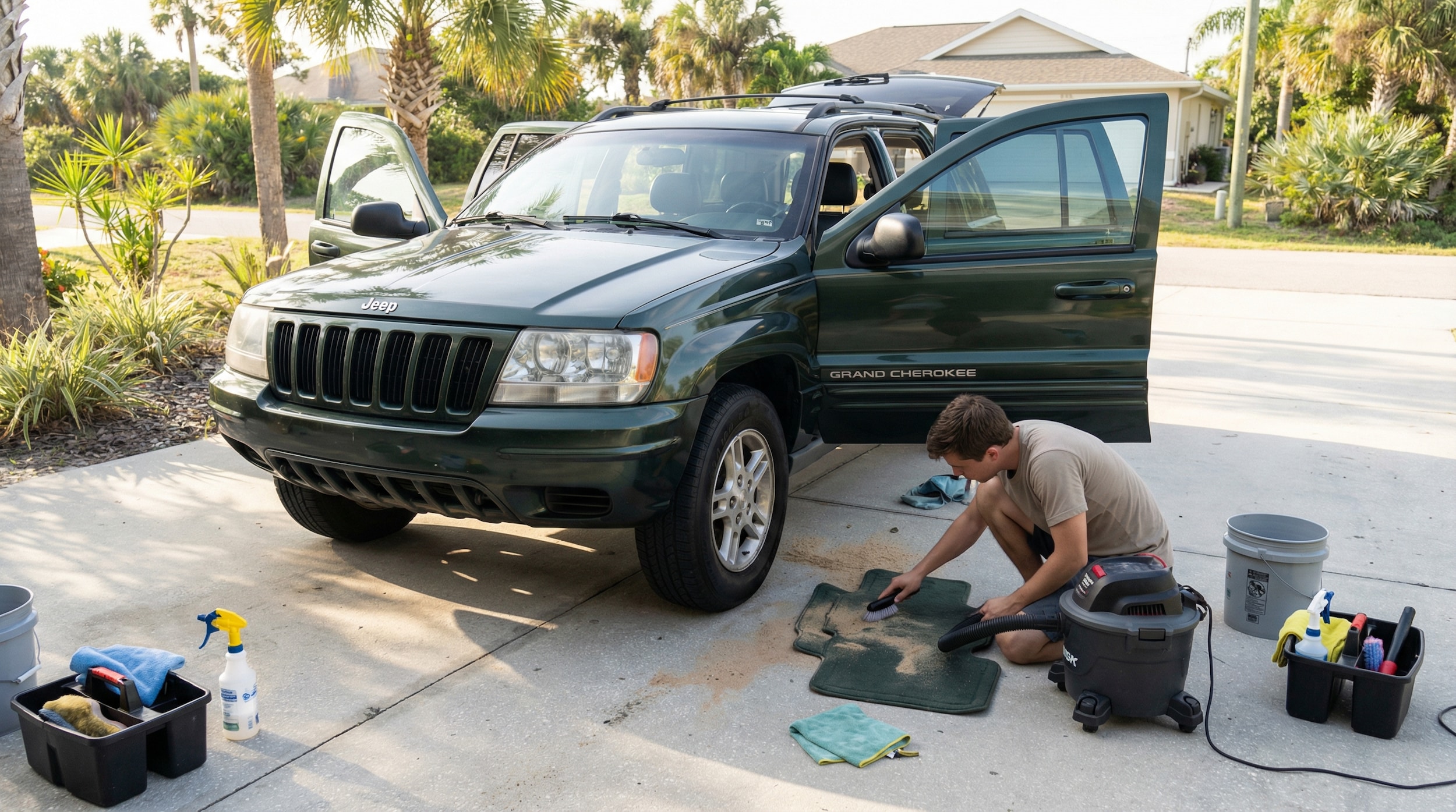
Sand between your seats, salt residue on your floor mats, and that lingering sunscreen smell - if you've spent any time at St. Andrews State Park or driving along Front Beach Road, your vehicle's interior tells the story. Spring cleaning your vehicle after beach season in Panama City, FL requires specific techniques to combat the unique challenges of coastal living, from the fine white sand that infiltrates every crevice to the humidity that can lead to unwanted odors.
Understanding Beach Season's Impact on Your Vehicle Interior
Your vehicle faces a triple threat during Panama City's beach season: sand acts like sandpaper on every surface it touches, salt air corrodes and stains materials faster than you might expect, and our 75% average humidity creates the perfect environment for mold and mildew. The combination becomes particularly damaging when tracked-in sand mixes with moisture, creating an abrasive paste that can permanently damage carpets and upholstery.
The fine sugar sand from Panama City Beach has a special talent for working its way into places you didn't know existed in your vehicle. Unlike regular dirt that sits on surfaces, beach sand embeds itself deep into carpet fibers and settles into the mechanical components of your seats. Salt residue, meanwhile, doesn't just affect your vehicle's exterior - it infiltrates through open doors and windows, leaving a film on leather, plastic, and fabric surfaces that attracts more dirt and moisture.
Essential Tools and Products for Beach Cleanup
Successfully removing beach contamination requires more than your standard car vacuum and all-purpose cleaner. Here's what you'll need for a thorough spring cleaning:
Professional-Grade Equipment:
- High-powered shop vacuum with crevice attachments
- Compressed air system or canned air
- Stiff-bristled detailing brushes in various sizes
- Microfiber cloths (at least 10-12)
- Rubber floor mat cleaner
- Steam cleaner (optional but highly effective)
Specialized Cleaning Products:
- Marine-grade upholstery cleaner
- Salt neutralizer spray
- Leather conditioner with UV protection
- Fabric guard spray
- Odor eliminator (enzyme-based)
- Glass cleaner without ammonia
The key difference between regular interior cleaning and post-beach restoration lies in the order of operations and the specific products used. Standard cleaners often fail to break down salt deposits, while regular vacuums lack the suction power needed to extract embedded sand.
Step-by-Step Deep Cleaning Process
Removing Sand from Carpets and Upholstery
Start your deep clean by removing everything from your vehicle - floor mats, cargo organizers, even items from door pockets and the glove box. This gives you full access to every surface where sand hides. For drivers of the spacious Tahoe or Suburban, pay special attention to third-row seating areas where beach gear often gets stashed.
Step 1: Pre-Treatment
Before vacuuming, use compressed air to blow sand out from between seats, seat tracks, and console crevices. Work from top to bottom, as sand will fall during this process.
Step 2: Mechanical Agitation
Use a stiff-bristled brush to agitate carpet fibers, bringing embedded sand to the surface. Work in small sections, brushing against the grain of the carpet.
Step 3: High-Power Vacuuming
Vacuum each section immediately after brushing, using overlapping strokes. For vehicles like the Traverse with its deep cargo well, you might need to repeat this process 2-3 times.
Addressing Salt Residue and Stains
Salt damage requires chemical intervention, as water alone can actually set salt stains deeper into fabrics. Whether you're cleaning the premium leather seats in a Grand Cherokee or the durable cloth interior of a Ram 1500, the approach remains similar with product variations.
| Surface Type | Cleaning Solution | Application Method | Dwell Time |
|---|---|---|---|
| Leather Seats | 1:10 vinegar solution + leather cleaner | Spray and wipe with microfiber | 2-3 minutes |
| Cloth Upholstery | Marine upholstery cleaner | Spray, agitate with brush, extract | 5-7 minutes |
| Vinyl/Plastic | Salt neutralizer spray | Spray and wipe immediately | No dwell time |
| Carpet | Hot water extraction with salt neutralizer | Machine application | 10-15 minutes |
Eliminating Beach Odors
That distinctive "beach car" smell - a mixture of sunscreen, salt air, and mildew - requires a multi-pronged approach. Simply masking odors with air fresheners creates a temporary fix that often makes the problem worse.
Begin by identifying the source. Check under seats where wet swimsuits might have been tossed, inspect trunk areas where beach chairs dripped, and don't forget to examine the headliner where humidity often causes mildew growth. The panoramic sunroofs in models like the Grand Cherokee can trap moisture along their seals, creating hidden odor sources.
For biological odors (mildew, mold), use an enzyme-based cleaner that breaks down organic compounds rather than covering them up. Apply the product liberally to affected areas and allow it to work for at least 30 minutes. Follow up with a thorough extraction or blotting, then ensure complete drying with fans or by parking in direct sunlight with windows cracked.
Protecting Your Interior Against Future Beach Trips
Prevention costs far less than restoration, especially when you're maintaining the quality interior of a Chrysler® Pacifica or the refined cabin of a Jeep® Wagoneer. Creating barriers between beach elements and your vehicle's surfaces makes future cleaning sessions quicker and more effective.
Fabric Protection:
- Apply marine-grade fabric protector to all cloth surfaces
- Reapply every 3-4 months during beach season
- Focus on high-traffic areas like driver's seat bolsters
Physical Barriers:
- Invest in custom-fit floor liners rather than universal mats
- Use waterproof seat covers during beach season
- Install cargo area protectors for hauling beach equipment
Smart Habits:
- Keep a portable vacuum in your vehicle for immediate sand removal
- Place microfiber towels on seats before sitting down wet
- Shake out beach gear away from your vehicle before loading
The technology in newer models helps too - the Stow 'n Go® seating in the Pacifica creates sealed compartments that prevent sand migration, while the washable cargo floors in Ram trucks make cleanup significantly easier.
Professional vs. DIY Detailing Considerations
While many spring cleaning tasks fall within DIY territory, certain situations warrant professional intervention. Deep sand infiltration into seat mechanisms, persistent odors despite thorough cleaning, or visible mold growth all signal the need for professional equipment and expertise.
Professional detailers have access to hot water extractors that reach 200+ degrees, effectively killing mold spores and bacteria that household equipment can't eliminate. They also use commercial-grade ozone generators for stubborn odor removal and have the experience to disassemble certain components safely for thorough cleaning.
For Panama City residents dealing with vehicles used frequently at Shell Island or Camp Helen State Park, consider professional detailing at least once per year as preventive maintenance. The salt exposure in our coastal environment accelerates wear on interior components, making professional-grade protection applications worthwhile investments.
Common Questions About Spring Cleaning Your Vehicle After Beach Season in Panama City, FL
How often should I deep clean my vehicle's interior during beach season in Panama City, FL?
Deep clean your vehicle's interior monthly during peak beach season (March through October) in Panama City, with lighter cleanings after each beach trip. Vehicles used for daily beach visits or those transporting sandy equipment like surfboards should receive bi-weekly attention to prevent permanent damage from sand abrasion and salt buildup.
What's the best way to remove sand from my Ram 1500's seat tracks?
Use compressed air to blow sand from Ram® seat tracks, working from multiple angles to dislodge particles from the mechanisms. Follow with a vacuum using a crevice tool, then apply a dry graphite lubricant to prevent sand from sticking to the tracks - never use wet lubricants that attract more debris.
Can salt air damage my Jeep's leather interior even if I don't park at the beach?
Yes, salt air in Panama City travels inland and settles on all surfaces, including leather interiors, where it draws out moisture and causes premature cracking. Protect your Jeep's leather by cleaning monthly with pH-neutral products and applying a conditioner with marine-grade UV inhibitors to combat our coastal environment.
How do I eliminate the musty smell from my Pacifica after beach season?
Remove the musty smell by first locating moisture sources, then treating with an enzyme-based odor eliminator designed for marine environments. Run your Pacifica's air conditioning on recirculation mode with an AC system cleaner, and consider placing moisture-absorbing products under seats between beach trips.
Should I use regular or marine-grade products for cleaning my Dodge's interior?
Marine-grade products work better for vehicles in Panama City due to their enhanced salt-fighting properties and mold inhibitors. These specialized formulas, originally designed for boats, contain ingredients that neutralize salt residue and prevent the mildew growth common in our humid coastal climate.
Where can I find professional detailing services for my Chrysler in Panama City, FL?
Professional detailing services are available throughout Panama City, with many shops specializing in salt and sand removal near the Beaches at Panama City and Pier Park areas. Look for detailers certified in ceramic coating applications and paint correction, as coastal vehicles benefit from these protective services.
Maintaining Your Vehicle's Interior Beyond Beach Season
After investing time in thorough spring cleaning, maintaining your vehicle's pristine interior becomes a matter of simple habits and regular attention. The coastal environment of Panama City demands more frequent interior care than inland areas, but the payoff appears in both comfort and resale value.
Set up a monthly maintenance schedule that includes vacuuming sand from common accumulation points, wiping down surfaces with appropriate protectants, and checking for early signs of salt damage or mildew. The advanced filtration systems in newer Chrysler, Dodge, Jeep, and Ram models help reduce airborne salt and sand, but they require regular filter changes to maintain effectiveness.
Remember that spring cleaning after beach season is just one part of coastal vehicle ownership. By combining thorough seasonal deep cleans with consistent maintenance and smart prevention strategies, you'll keep your vehicle's interior looking and smelling fresh despite the challenges of beachside living. When you're ready to explore our new inventory or need professional service advice, the team at Bay Chrysler Dodge Jeep Ram understands the unique demands Panama City places on your vehicle and can help you protect your investment for years of beach adventures ahead.