




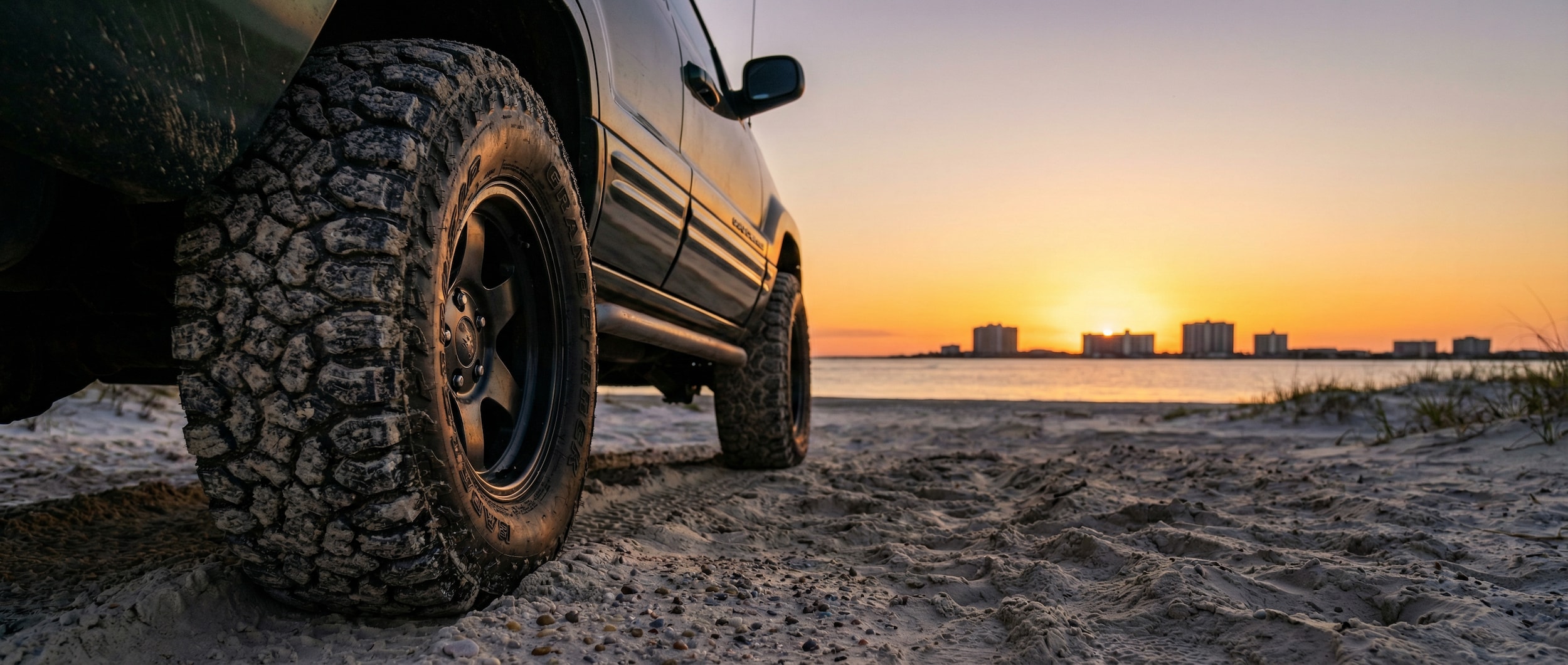
A 40-degree temperature drop in Panama City, FL can cause your tire pressure to plummet by 8 PSI overnight - enough to trigger your TPMS warning light and compromise your vehicle's performance. From scorching afternoons near St. Andrews State Park to surprisingly cool mornings along the Emerald Coast, our unique Gulf weather patterns create constant pressure fluctuations that many drivers overlook. Understanding how these temperature swings affect your Chrysler®, Dodge®, Jeep®, or Ram® isn't just about avoiding that annoying dashboard light - it's about maintaining optimal fuel economy, tire life, and safety throughout our unpredictable Florida seasons.
How Panama City's Gulf Climate Creates Unique Tire Pressure Challenges
Your tires lose approximately 2 PSI for every 10-degree temperature drop, and Panama City's proximity to the Gulf of Mexico creates some of the most dramatic daily temperature swings in Florida. What makes our area particularly challenging is the combination of intense afternoon heat radiating off Highway 98's asphalt and cool maritime breezes that sweep across Panama City Beach after sunset.
During summer months, the concrete at Pier Park can reach temperatures exceeding 140°F, causing tire pressure to spike well above recommended levels. Then overnight, Gulf breezes can drop temperatures by 20-30 degrees, leaving you with significantly underinflated tires by morning.
The rapid pressure changes aren't just inconvenient - they accelerate tire wear patterns. Underinflated tires develop excessive wear on the outer edges, while overinflation causes center tread wear. For drivers commuting daily on Highway 231 from Lynn Haven or traveling regularly on the Hathaway Bridge, these wear patterns can reduce tire life by up to 25%.
Temperature Swings and Your Vehicle's TPMS System
Modern Chrysler, Dodge, Jeep, and Ram vehicles feature sophisticated Tire Pressure Monitoring Systems that alert you when pressure drops 25% below manufacturer specifications. In Panama City's climate, where morning temperatures near Grand Lagoon can differ by 30 degrees from afternoon highs, your TPMS becomes essential for maintaining proper inflation.
The TPMS sensors in your vehicle measure both pressure and temperature inside each tire. When you park your Jeep Cherokee at Frank Brown Park for a morning hike and return to find the TPMS light illuminated, it's often because the tire temperature increased significantly, then normalized, creating a pressure differential the system detected.
Common TPMS Triggers in Panama City Weather:
- Morning cold snaps below 50°F (frequent December through February)
- Rapid warming after sunrise (daily occurrence year-round)
- Afternoon thunderstorms cooling hot pavement by 20+ degrees
- Cold fronts dropping temperatures 30-40 degrees overnight
- Extended parking on hot surfaces at Panama City Mall or Gulf Coast State College
Understanding your TPMS alerts helps distinguish between normal pressure fluctuations and actual tire problems. A TPMS light that appears consistently in the morning but disappears after driving indicates temperature-related pressure changes rather than a leak.
Seasonal Tire Pressure Management Strategies
Managing tire pressure through Panama City's seasons requires different approaches for our humid summers versus mild winters. The key lies in checking and adjusting pressure during the coolest part of the day for accurate readings.
Summer Strategy (May through October):
Check tire pressure early morning before 8 AM when temperatures are coolest. During these months, afternoon temperatures regularly exceed 90°F, causing pressure to increase 6-8 PSI above morning readings. Setting pressure slightly below maximum in the morning accounts for afternoon expansion.
For Ram 2500 HD owners who tow boats to St. Andrews Marina, maintaining proper pressure becomes even more critical. The combination of heavy loads and hot pavement can push tire temperatures dangerously high if you start with overinflated tires.
Winter Strategy (December through February):
Panama City's winter brings the most dramatic temperature swings. A typical January day might start at 38°F near Deer Point Lake and reach 72°F by afternoon. Check pressure during the warmest part of the day and add 2-3 PSI above recommended levels to compensate for overnight cooling.
During transition months (March, April, November), check tire pressure weekly. These months feature the most unpredictable temperature patterns, with cold fronts arriving suddenly and departing just as quickly.
Vehicle-Specific Pressure Requirements
Each vehicle in the Chrysler, Dodge, Jeep, and Ram lineup has specific tire pressure requirements that optimize performance, fuel economy, and tire life. These specifications account for vehicle weight, tire size, and intended use.
| Vehicle Model | Front PSI (Cold) | Rear PSI (Cold) | Max Load PSI |
|---|---|---|---|
| Jeep Cherokee | 33 | 33 | 36 |
| Ram 1500 | 35 | 35 | 41 |
| Dodge Durango | 36 | 36 | 40 |
| Jeep Grand Cherokee | 33 | 33 | 36 |
| Ram 2500 HD | 60 | 60 | 80 |
These specifications assume "cold" tire readings - meaning the vehicle hasn't been driven for at least three hours. In Panama City's climate, achieving true cold readings can be challenging during summer months when overnight temperatures rarely drop below 75°F.
For optimal performance on Highway 77 or during beach driving near Shell Island, maintain pressure at the higher end of the recommended range. The firm surface pressure improves fuel economy and handling. When venturing onto softer surfaces like the sand access roads near Camp Helen State Park, you might temporarily reduce pressure for better traction, but always reinflate immediately after.
The heavy-duty trucks like Ram 2500 HD and Ram 3500 require significantly higher pressures due to their weight and towing capacity. These vehicles often feature dual rear wheels that need careful monitoring, as inner and outer tires can develop different pressures over time.
Warning Signs of Pressure-Related Tire Damage
Temperature-induced pressure changes can mask developing tire problems if you're not vigilant. Regular visual inspections help catch issues before they become dangerous or expensive.
Visual Indicators to Check Monthly:
- Uneven tread wear patterns across the tire surface
- Sidewall bulges or cracks
- Center tread wearing faster than edges (overinflation damage)
- Outer tread wearing faster than center (underinflation damage)
- Cupping or scalloping along tread blocks
- Visible steel belts or fabric through the rubber
During Panama City's rainy season (June through September), proper tire pressure becomes critical for hydroplaning resistance. Underinflated tires can't channel water effectively, increasing the risk on rain-slicked roads like Highway 390 or the approach to the Hathaway Bridge.
Tires that consistently lose pressure despite no visible damage might have rim leaks caused by corrosion. The salt air from the Gulf accelerates rim oxidation, creating tiny gaps where air escapes. This is particularly common for vehicles frequently parked near the beach or boats launching at Captain Anderson's Marina.
Professional Tire Pressure Services and Technology
Modern tire pressure management goes beyond the basic air pump at gas stations. Today's service departments offer sophisticated solutions for maintaining optimal pressure despite temperature swings.
The service team uses digital inflation systems that automatically adjust for ambient temperature, ensuring your tires receive the exact pressure needed. These systems account for the 85°F service bay temperature versus the 95°F pavement temperature you'll encounter driving home on Highway 231.
Advanced Services for Pressure Management:
- TPMS sensor replacement and calibration
- Nitrogen tire inflation for reduced pressure variation
- Wheel and rim inspection for air leaks
- Tire rotation based on wear patterns
- Pressure monitoring system updates
For fleet vehicles and commercial trucks operating from Panama City to Tallahassee, maintaining consistent tire pressure directly impacts fuel costs. A Ram 3500 running 5 PSI low on all tires consumes approximately 3% more fuel - adding up to hundreds of dollars annually for high-mileage operations.
The latest TPMS technology in newer models can display individual tire pressures on your dashboard, eliminating guesswork. Some systems even adjust pressure recommendations based on load, speed, and ambient temperature - particularly useful for varying loads in pickup trucks.
Common Questions About Tire Pressure Changes in Panama City, FL
How often should I check my Ram 1500's tire pressure in Panama City's changing weather?
Check your Ram 1500's tire pressure every two weeks during spring and fall when Panama City experiences the most dramatic temperature swings. During stable summer and winter weather, monthly checks are sufficient unless you notice TPMS warnings. Always check pressure before long trips on I-10 or when towing boats to local marinas.
Does the humidity in Panama City, FL affect tire pressure like temperature does?
Humidity has minimal direct effect on tire pressure compared to temperature changes in Panama City. While water vapor is lighter than air, the difference is negligible for tire pressure purposes. Focus on temperature fluctuations between morning and afternoon rather than humidity levels when monitoring your Jeep's tire pressure.
What's the best time of day to add air to tires in Panama City, FL?
Add air to your tires during the coolest part of the day, typically between 6-8 AM in Panama City. This provides the most accurate 'cold' pressure reading before the Florida sun heats the pavement. Avoid adding air immediately after driving or during peak afternoon heat when tires are expanded.
Should I adjust my Dodge Durango's tire pressure for beach driving near Panama City Beach?
Keep your Durango's tire pressure at manufacturer specifications for paved roads around Panama City Beach. Only reduce pressure for extended soft sand driving, and immediately reinflate to proper levels before returning to Highway 98. Most beach access points have firm enough sand that standard pressure works fine.
Why does my Jeep Cherokee's TPMS light come on during cold mornings in Panama City?
Your Cherokee's TPMS activates when tire pressure drops 25% below recommended levels, which can happen during Panama City's occasional winter cold snaps. A 30-degree temperature drop overnight can reduce pressure by 6 PSI, triggering the warning. The light often disappears after driving warms the tires.
Can salt air from the Gulf affect tire pressure monitors in Panama City vehicles?
Salt air can corrode TPMS sensor batteries and valve stems over time, potentially causing false readings or sensor failure after 5-7 years in Panama City's coastal environment. Regular service inspections can catch corrosion early, and protective valve caps help extend sensor life near the beach.
Maintaining Optimal Performance Year-Round
Understanding how Panama City's temperature swings affect your tire pressure transforms a minor annoyance into a manageable part of vehicle maintenance. Those morning TPMS warnings aren't defects - they're your vehicle responding naturally to our unique Gulf Coast climate. By checking pressure regularly during the coolest part of the day and adjusting for seasonal patterns, you'll maximize tire life, improve fuel economy, and ensure safe handling whether you're navigating downtown traffic or cruising down Front Beach Road.
The investment in proper tire pressure maintenance pays dividends through longer tire life and better fuel economy. For the typical Panama City driver covering 15,000 miles annually, maintaining optimal pressure can save $200-300 in fuel costs alone. When you factor in extended tire life and improved safety during our summer thunderstorms, the few minutes spent checking pressure becomes time well invested. The team at Bay Chrysler Dodge Jeep Ram understands these local challenges and can help you develop a tire maintenance strategy that works with your driving patterns and our coastal climate.