




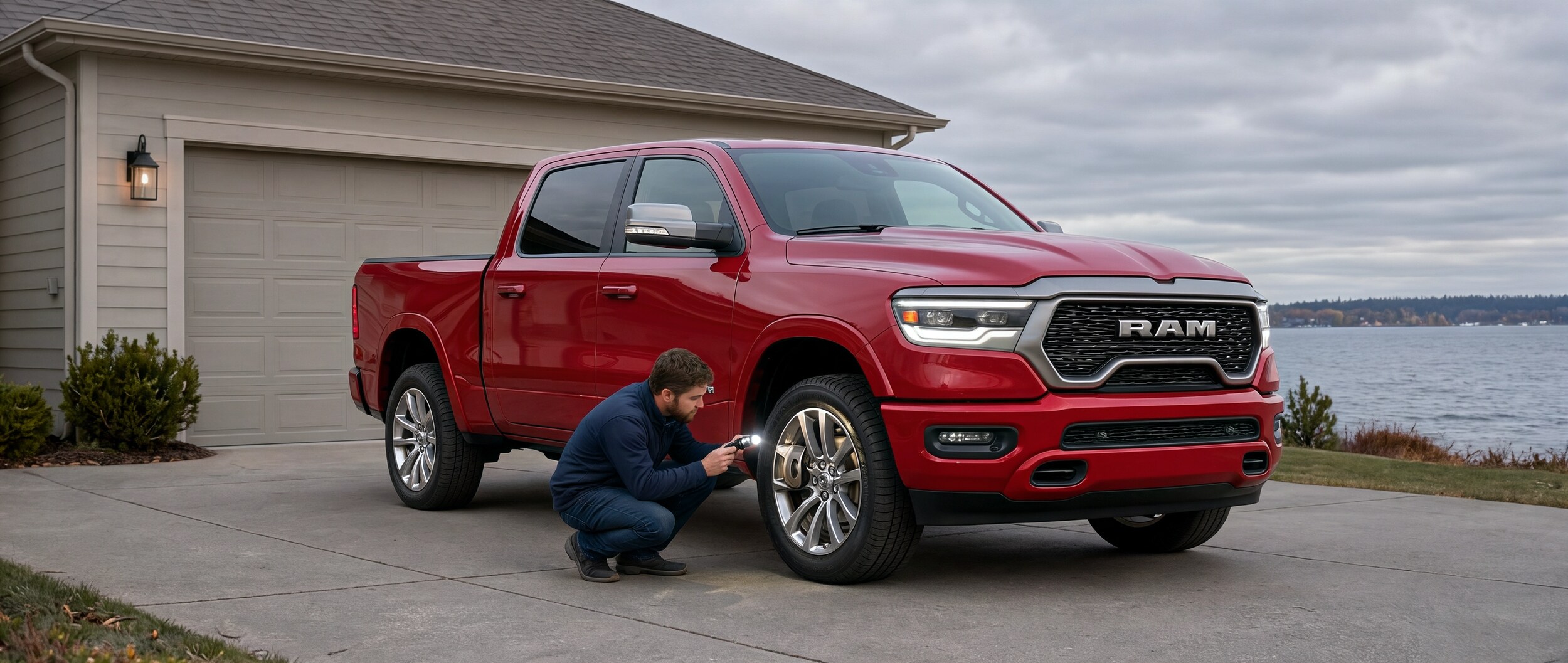
That low squeal when you ease off the gas onto US-98, the one you've been meaning to look at for two weeks. Is your brake system flagging something specific? Most of the time it's a wear indicator telling you the pads are getting close, but on the Gulf Coast, what looks like a timing question is often a humidity question too.
Key takeaway: brake squeal vs. grinding urgency in Panama City
If your brakes squeal consistently at every stop, you have roughly one to two weeks to schedule service before pads reach the wear limit; if you hear grinding, the pad is gone and the rotor is being scored with every stop, and that is a same-day check.Brake Symptoms in Panama City: Squealing, Grinding, and Soft Pedals Explained
Each brake symptom points to a different component, and the gap between "schedule something soon" and "stop driving today" runs wider than it looks from the driver's seat. A squeal is a heads-up. Grinding is a heavier conversation. A pedal that sinks toward the floor is its own category entirely, and of the three, it's easily the most urgent one to act on.
Brake symptoms on your Ram or Jeep in Panama City: likely causes and urgency
| Symptom | Likely cause | Urgency |
|---|---|---|
| Intermittent cold-start squeal | Surface oxidation clearing with heat | Monitor |
| Consistent squeal at every stop | Pads near wear limit (~3mm) | Schedule within days |
| Grinding or metal growl | Pads at or below 2mm, backing plate contact | Same day |
| Spongy or sinking pedal | Air in lines, low fluid, or master cylinder | Immediate |
| Pull to one side | Seized caliper or uneven wear | Schedule within days |
| Pedal vibration or pulsation | Warped rotors | Schedule within days |
| Red brake warning light | Low fluid or hydraulic fault | Same-day check |
A spongy or sinking pedal is the one worth flagging here, since it almost always means you're into the hydraulic side of the system, not just the pads. So the repair runs more involved than a pad swap, and the check needs to happen sooner.
How Urgent Is a Brake Problem in Panama City, and Can You Keep Driving?
Urgency scales with the symptom, so a faint cold-start squeal and a steady metal growl sit at opposite ends of how fast you need to move. A faint, intermittent squeal at cold start often clears once the rotors warm and throw off a little surface oxidation. Nothing alarming there. A consistent squeal during every stop means the pads are reaching their wear limit, and you're in the schedule-within-the-week window. Schedule service online before that window closes.
Can you keep driving with that brake symptom on your Ram or Jeep in Panama City?
Grinding or a metal-on-metal growl puts you in a different category. By that point the pad material has worn through to the backing plate, and every stop scores the rotor surface. Don't wait a week on this one. Make the call today.
Can You Check a Brake Problem Yourself, or Does It Need the Service Team?
You can run a few brake checks at home that genuinely help and cost you nothing, but the ones that actually measure wear need a lift, a micrometer, and eyes on the hardware underneath the vehicle. Knowing which check is which saves you time, and it keeps you from making a confident but wrong call about how much runway you've got left.
What the home check can't tell you is fluid condition, caliper function, and rotor thickness. The minimum thickness is stamped on each rotor's hat, and reading it accurately takes a micrometer. Those measurements live under the vehicle and need the right tools.
What Happens When You Bring Your Ram or Jeep in for a Brake Check?
When you bring your Ram or Jeep in, the brake inspection follows a fixed order that covers every component, down to the parts the symptom didn't point you toward. The Ram 1500 and Grand Cherokee both log heavy stop-and-go miles around town, the kind of driving that builds heat in the braking system over and over without letting it fully cool. So the order holds regardless of how obvious the problem looks. It doesn't skip steps.
How a brake inspection works for Ram and Jeep owners in Panama City
A brake inspection often surfaces rotor wear or fluid condition as the real finding, even when it's a squealing pad that brought the vehicle in. Those two checks run every time.
Does Gulf Coast Salt Air in Panama City Make Brake Problems Worse?
Yes, and the mechanism is straightforward, though it matters more on highway runs than on a short trip to the store. Panama City sits on the Gulf Coast, and relative humidity here averages around 76 to 79 percent year-round. Brake fluid, the glycol-based type most vehicles use, is hygroscopic, which means it pulls moisture directly from the surrounding air through the system's seals and vents over time. Fresh DOT 3 fluid has a dry boiling point of 401 degrees Fahrenheit. Once it absorbs enough moisture, that effective boiling point drops to around 284 degrees. Under normal city driving that shift isn't catastrophic, though it matters if you're running long highway stretches or towing.
The salt air layered on top of that humidity speeds up corrosion on brake-line hardware, caliper hardware, and the small metal clips that keep the pads seated evenly. A vehicle that's parked near the Gulf works against that corrosion through every season, not only in peak summer. So the undercarriage gets a look on every brake service here rather than riding along as an optional step.
Panama City Gulf Coast humidity and your brake fluid
Panama City averages 76 to 79 percent relative humidity year-round, with salt air traveling inland from the Gulf on coastal breezes. Because glycol-based brake fluid is hygroscopic, that persistent coastal moisture compresses the timeline on boiling-point degradation compared with dry inland climates, making fluid condition a more time-sensitive check here than mileage alone suggests.How Do You Keep Brake Problems From Coming Back?
You can't erase the Gulf Coast's effect on brake hardware, but you can stay well ahead of it with the right interval and a habit of checking the parts that corrode first. Jeep Wrangler owners who run the vehicle near the coast or on beach access roads deal with more hardware exposure than a purely highway commuter. Chrysler Pacifica families covering school runs and holiday travel put more heat cycles into the system each year than the mileage alone suggests. The interval that works inland doesn't always translate here.