




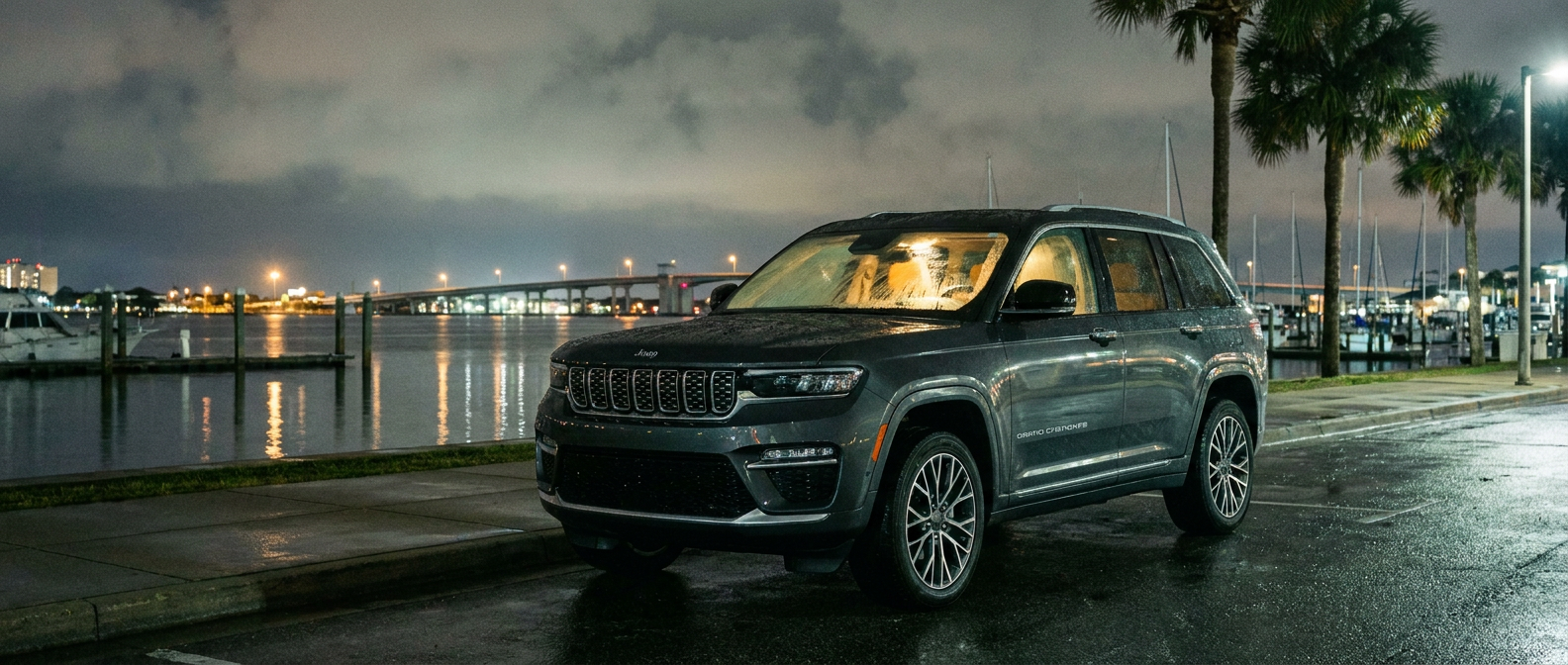
The fastest fix is free, and it takes two seconds. Press the recirculation button off and let fresh Gulf air into the cabin. That single move clears most inside-glass fog within a minute. But if the haze is forming on the *outside* of your windshield (which is exactly what happens on October nights here), that button does nothing. You'll need wipers and a small A/C adjustment instead.
Those two are different problems, and mixing them up wastes heat on glass that keeps fogging right back. Sort the cause first.
We ranked these six fixes by how quickly they work and how often each one turns out to be the actual root cause for Panhandle drivers this time of year.
Book a service visit if your climate system isn't clearing the glass the way it used to. Sometimes the fix is a button press. Sometimes it's a clogged cabin filter that's been fighting Gulf air all summer.
How the Six Fixes Stack Up
| Rank | Fix | Best for | What it does | Speed |
|---|---|---|---|---|
| 1 | Kill recirculation, switch to fresh air | Inside fog | Flushes trapped humid cabin air out | Under 60 sec |
| 2 | Identify inside vs. outside fog | Every situation | Wipe the glass (outside) or run A/C and defroster (inside) | Immediate |
| 3 | A/C on with defroster, warm air | Inside fog, cool nights | A/C compressor dehumidifies; heat warms the glass above the dew point | 1-3 min |
| 4 | Crack a rear window an inch | Stubborn inside fog | Gives humid cabin air an exit path | 2-3 min |
| 5 | Clean the inside glass surface | Recurring inside fog | Removes the oily film that gives moisture something to cling to | Prevents it |
| 6 | Replace the cabin air filter | Chronic, slow-clearing fog | Restores the airflow the climate system needs to pull humidity out | Long-term |
What Is Actually Fogging: Outside or Inside?
Whether the moisture sits on the outside or the inside of the glass decides every fix that follows, so sort that out before you touch a single control. Get it right and you're clear in under two minutes. Get it wrong and you can run the defroster for ten minutes and make it worse.
Touch the glass quickly with one finger. If the fog smears, the moisture is inside. If it doesn't move, it's on the outside.
On Gulf Coast nights in October, with relative humidity sitting around 70 percent even after the summer peak, the ambient air drops in temperature faster than your A/C-chilled glass warms back up. Humid outdoor air hits cooler glass and condenses right there on the outside. A single wiper pass clears it. Then ease the A/C temperature setting back a degree or two so the glass surface isn't staying as far below the dew point.
Inside fog is a completely different mechanism. That comes from moisture trapped in the cabin, and the recirculation button is almost always why it's stuck there.
Fix 1: Kill Recirculation the Moment Fog Appears
Flip recirculation off the moment fog shows up, because it seals the outside-air intake and spins the same cabin air around on a loop, and that air carries the humidity that condenses on your glass. It's full of breath moisture, wet shoes from a beach trip, a damp towel in the back, and whatever flooded in when you opened the door after an afternoon squall. When that saturated air hits the windshield, it condenses there. The system spins it in a loop.
Fresh air mode brings outside air in through the intake. Even on a humid Panhandle night, outside air is less moisture-saturated than the air trapped inside a closed car after several minutes of recirculation. Fresh air flushes the humid cabin air out through the vehicle's natural pressure-exhaust points.
Recirculation is genuinely useful. Use it to cool the cabin fast on a brutal August afternoon, then flip it off once you're at temperature. Kill it the second glass hazes.
The Grand Cherokee's dual-zone climate system makes this easier because the driver and front-passenger sides can manage separate airflow preferences without anyone fighting over the recirculation toggle.
Fix 2: Run A/C and Defroster Together
Run the A/C and the defroster together, because warm air alone only shoves humid air at the glass with more force, while the compressor is what actually pulls the moisture out before it reaches the surface. The instinct to hit the defroster and crank the heat gets you only half of what clears inside fog on a humid night.
The defroster button directs airflow toward the windshield. Good. But warm air by itself doesn't pull moisture out of the air. It just aims humid air at the glass with more force. The A/C compressor is what actually dehumidifies, removing moisture from the air before it reaches the glass surface. Run both together. Defroster on, A/C on, fan at medium or high, and fresh air mode active (not recirculation).
Jeep Wrangler owners should keep this pairing in mind. Soft-top and removable-door configurations let far more ambient humidity into the cabin than a sealed SUV does. After a trail run or a rainy beach day, that pairing earns its keep.
Pros and Cons of Running A/C to Defog in Cool Weather
| Pros | Cons |
|---|---|
| A/C compressor actively dehumidifies cabin air | Feels counterintuitive when temps drop to the mid-60s at night |
| Works on both inside-glass moisture and ambient humidity | Adds a small engine load while defogging |
| Clears glass noticeably faster than heat-only approach | Not effective if the cabin air filter is badly restricted |
| Pairs with fresh air mode to flush moisture out continuously | Requires A/C system to be in proper working order |
Fix 3: Crack One Rear Window About an Inch
Cracking one rear window about an inch gives the humid cabin air a clean exit, and it works better than it sounds, because a sealed cabin leaves the displaced moisture nowhere to go but the next cold surface. Run the defroster fully closed up and that moisture just migrates until it finds another cold pane.
Opening that gap about an inch creates a slight pressure differential as the vehicle moves. Humid cabin air gets pulled out through it rather than circulating. You'll notice the defroster catches up meaningfully faster. This helps most after carrying three or four people on a rainy night, because every passenger adds breath moisture and cabin humidity climbs fast.
Fix 4: Clean the Inside of the Glass
A clean inside surface sheds condensation far better than a filmed-up one, so wiping the interior glass is worth doing even though it prevents fog rather than clearing it mid-event. Over time the inside of the windshield builds a film from dashboard-plastic outgassing, skin oils, and sunscreen residue off Gulf beach trips, and that film gives water droplets something to anchor to.
Use an ammonia-free automotive glass cleaner and a microfiber cloth. If the windows are tinted, confirm the product is tint-safe first. Wipe in small circles to break up the film, then finish with horizontal strokes for a streak-free surface. Do this once and notice how much less the inside fogs on the next humid night.
The catch is that this is prevention, not a rescue. It won't help much in the middle of a fog event. It reduces how often that event happens.
Fix 5: Replace the Cabin Air Filter
A clogged cabin air filter chokes the airflow your climate system needs to pull humidity out, so even with every setting right the glass will clear slowly when the media is packed tight. Watch for weak airflow from the vents, a musty smell when the A/C kicks on, or a windshield that hazes and takes five or more minutes to clear with the correct settings.
In a coastal Florida market, the national replacement interval runs short. Most automotive references recommend replacement every 12,000 to 15,000 miles under normal conditions. Panama City sits on the Gulf Coast of Florida. The combination of a long pollen season (tree pollen runs January through June with a March-April peak, then grasses through summer) and year-round A/C use loads the filter media faster than that national interval assumes. Inspect it yearly at minimum, and replace it when the media is visibly grey and packed rather than waiting for the mileage marker.
Our service team checks the cabin filter at every service visit. We can swap it the same day.
Browse our pre-owned inventory if you're in an older vehicle whose climate system has been fighting Gulf humidity for years without a win. Sometimes the right fix is a newer truck or SUV with a climate system that's actually sized for this market.
The Right Order When Fog Hits Tonight
When fog hits on a humid Panama City night, work the fixes in order of speed, and you'll clear the glass fastest by sorting the cause before you reach for the heat. You've got the full toolkit now, so here's the sequence we'd run, from the two-second check to the long-term one.
- Touch the glass. Inside fog (smears) or outside fog (doesn't smear)?
- Outside fog: wiper pass, then ease the A/C temperature up slightly.
- Inside fog: recirculation off, fresh air on. Right now.
- Defroster and A/C together, fan at medium or high, temperature set to warm.
- Crack a rear window about an inch.
- If it's still slow clearing after all of that, the cabin air filter is the most likely culprit.
That sequence handles the overwhelming majority of fogging situations we see on the Gulf Coast in October. Step 3 alone eliminates it most of the time. The rest of the list covers the nights when the air has been sitting in that cabin long enough, or the filter has quietly reached the end of its useful life.
By the Bay Chrysler Dodge Jeep Ram Team | October 2026